Project Glasswing Means AI Security Is Now a Software Team Problem
Anthropic’s Project Glasswing signals a hard shift for builders and operators. Frontier AI is moving from coding assistant to software security force, and teams that still treat vulnerability discovery like a periodic compliance chore are already behind.

Listen to this post
Anthropic just made the builder-facing AI story a lot less theoretical.
Project Glasswing is not another cute copilot update. It is Anthropic saying frontier models are now credible participants in software security itself. According to Anthropic, Claude Mythos2 Preview found thousands of high-severity vulnerabilities, including issues across every major operating system and web browser, while the company committed up to $100 million in usage credits and $4 million in donations to support the initiative.
That is not a feature launch. That is a change in operating assumptions.
Frontier AI is moving into the security loop
The most important part of Project Glasswing is not the partner list, though that list is loaded: AWS, Apple, Broadcom, Cisco, CrowdStrike, Google, JPMorganChase, the Linux Foundation, Microsoft, NVIDIA, and Palo Alto Networks are all involved according to Anthropic. The real signal is that top-tier infrastructure and security players are acting like frontier-model vulnerability discovery is now practical enough to matter.
That should get every software team’s attention.
For years, most engineering orgs treated security review as a mix of tooling, annual rituals, bug bounty luck, and overworked humans trying to keep up. Glasswing points to a nastier reality. Models are getting good enough to search huge codebases, reason across dependency chains, and surface ugly flaws faster than many teams can remediate them.
If your security posture still depends on discovering problems slowly, you are building on borrowed time.
This is where secure SDLC stops being optional theater
The old lazy pattern was simple:
- ship fast
- backlog security debt
- run scanners occasionally
- patch when the issue looks scary enough
- pray nothing catastrophic is already sitting in production
That model was weak before. It looks suicidal if AI-led discovery keeps accelerating.
Microsoft’s Security Response Center basically confirmed the direction. In its April 2026 post on evolving secure software at global scale, Microsoft said AI-led vulnerability discovery is becoming core to security response. It also said Claude Mythos Preview showed substantial gains on the CTI-REALM benchmark and will be available through Microsoft Foundry for Project Glasswing participants.
Read that again carefully. This is not just Anthropic hyping itself. One of the biggest software vendors on earth is talking like AI-discovered vulnerabilities are entering the normal response stack.
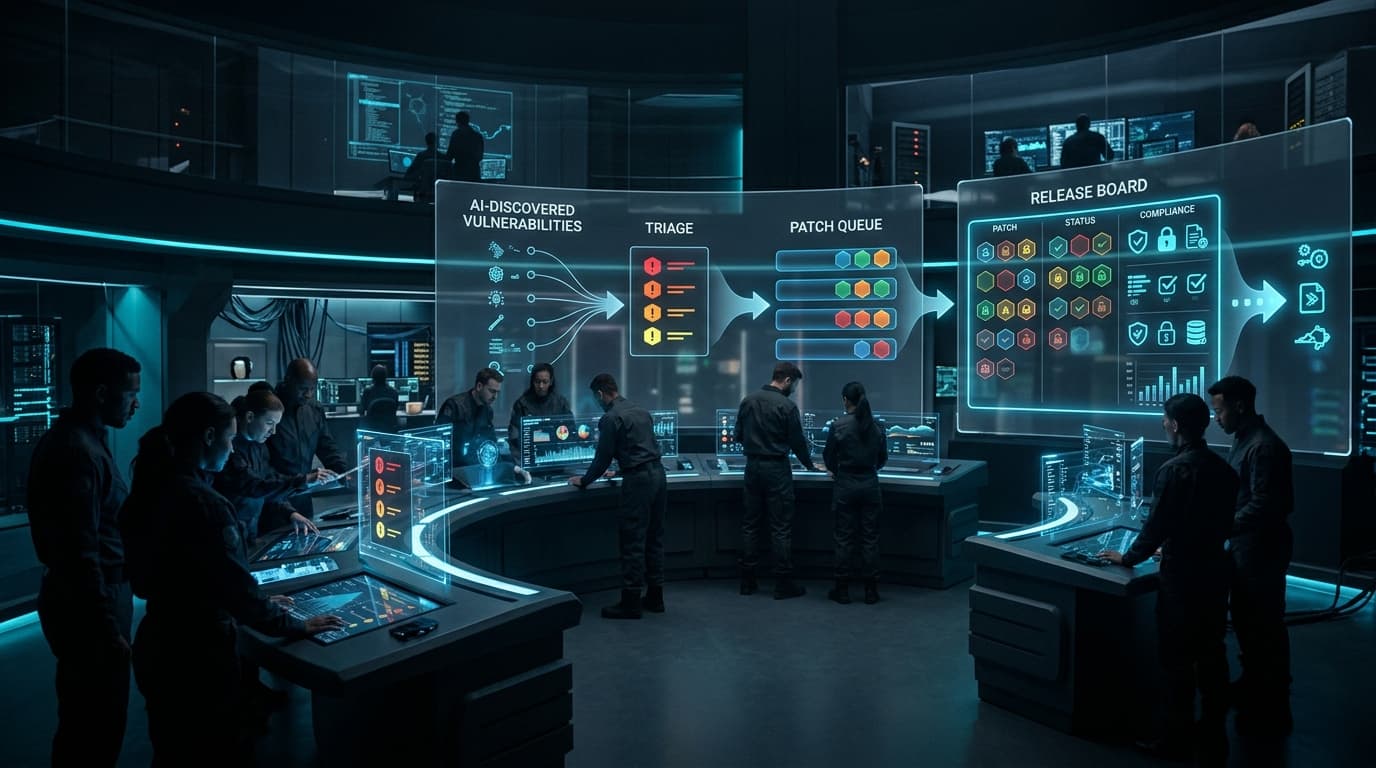
That means secure SDLC can no longer be treated as ceremonial policy. Teams need a workflow that assumes more findings, faster triage, tighter verification, and better traceability.

Audit trails are about to matter as much as raw detection
A lot of teams will hear this story and fixate on detection horsepower. Fair, but incomplete.
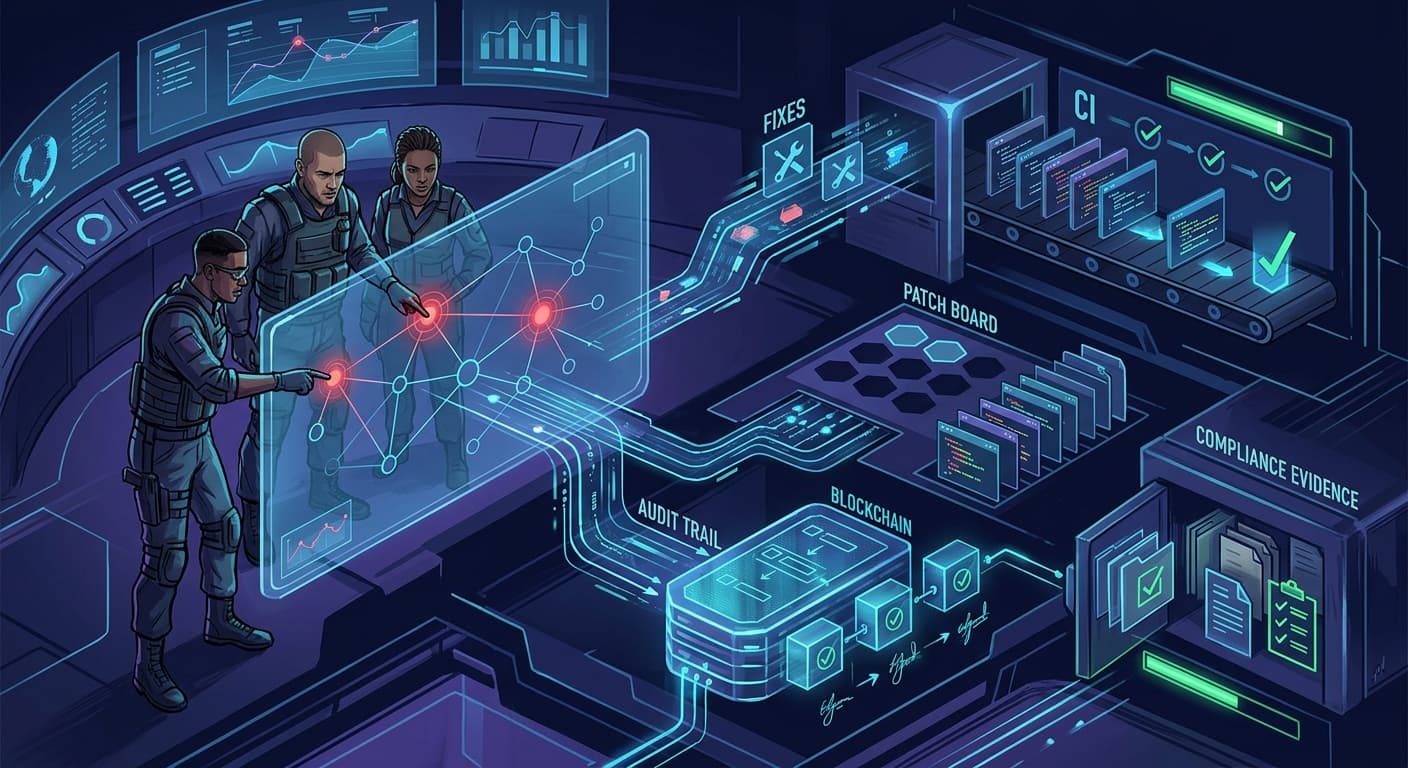
The winner is not the team that discovers the most vulnerabilities. The winner is the team that can prove what was found, what was real, what got fixed, what shipped, and what still carries risk.
That is the operating shift.
Once AI systems start flooding pipelines with plausible security findings, the bottleneck moves fast:
- finding quality
- deduplication
- severity scoring
- ownership routing
- fix validation
- release evidence
- exception handling
Without a clean audit trail, teams will drown in noise or fake confidence.
This is where builders need to grow up a bit. If you cannot connect an AI-discovered issue to a ticket, patch, reviewer, test result, and deployment artifact, you do not have a security workflow. You have a fancy alarm system screaming into the void.
The broader industry race is already on
Anthropic is not alone here. OpenAI’s cyber resilience announcement makes the same larger point from a different angle. The company says frontier cyber capabilities are rising quickly, points to major benchmark gains, and is launching Aardvark in private beta alongside a trusted access program.
So no, this is not one company’s weird side bet.
This is the industry converging on the same conclusion: advanced models are becoming powerful enough in cyber that access, safeguards, and deployment patterns now matter strategically.
For software teams, the practical takeaway is brutal and simple. Whether you use Anthropic, Microsoft, OpenAI, or some eventual internal stack, you should assume AI-assisted vulnerability discovery is moving toward baseline expectation.
Not a nice extra. Baseline.
My blunt read
Project Glasswing is the clearest sign yet that frontier AI is becoming a software security force.
Not someday. Now.
If you run engineering, security, or platform, the right move is not to admire the demo. It is to rebuild your workflow around the consequences:
- security review has to happen earlier
- remediation has to be traceable
- audit evidence has to be first-class
- patch velocity has to improve
- release processes need clearer ownership
- old code debt needs to be treated like live exposure
The teams that adapt will use AI to tighten the loop between detection and remediation.
The teams that do not will discover something unpleasant. AI does not just make defenders faster. It makes sloppy operating models easier to expose.
That part is going to hurt.
Sources: Anthropic Project Glasswing, Microsoft Security Response Center, OpenAI on strengthening cyber resilience, Wired