Claude Mythos and Project Glasswing Mean Secure SDLC Just Became a Builder Problem
Anthropic's Project Glasswing and Claude Mythos Preview make one thing painfully clear. AI coding gains now come with AI exploit risk, and software teams need secure SDLC, audit trails, and defensive workflows that can move at model speed.

Listen to this post
Anthropic just made the dual-use AI story impossible for builders to ignore.
Project Glasswing is not just a flashy security initiative. It is Anthropic admitting that frontier coding models are now powerful enough to find and exploit serious software vulnerabilities at a level that changes how software teams need to operate. In Anthropic's own announcement, Claude Mythos Preview found thousands of high-severity vulnerabilities, including issues across major operating systems and web browsers, and the company launched Glasswing with major partners plus up to $100 million in usage credits and $4 million in open-source security support.
That is the useful part and the uncomfortable part.
The same capability jump that makes AI better at writing, refactoring, and understanding code also makes it better at breaking software. Builders who only focus on productivity are missing half the damn picture.
Better coding models now carry exploit upside too
Anthropic's Frontier Red Team post is the real gut punch. The company says Mythos Preview can identify and exploit zero-days across every major operating system and every major web browser it tested, including old bugs that survived years of human review and automated testing. It also says many of these results were achieved autonomously, not through constant human steering.
That matters because these capabilities were not framed as a weird special-purpose cyber model. Anthropic explicitly says they emerged from general improvements in code, reasoning, and autonomy.
That means the builder market does not get a clean split where one model writes code and another dangerous model does security offense. The same curve is pushing both.
If you are celebrating stronger code generation, agentic debugging, and deeper repo understanding, fine. You should be. But you also need to understand that the exploit side rides the same slope.
Secure SDLC is now an operating requirement, not policy wallpaper
Most software teams still treat secure development like an extra layer they can bolt on later:
- ship first
- scan later
- create tickets
- let the backlog rot
- patch only when something looks scary enough
That workflow was already weak. With AI-led vulnerability discovery, it gets exposed fast.
Microsoft's April 2026 MSRC post is useful here because it shows where serious operators are heading. Microsoft says AI is already deeply embedded in how it secures its own environment and that new generations of AI are extending cyber defense with more reach, speed, and consistency. It also says AI can discover more issues across a broader surface area, around the clock, and that MSRC is adding automation to validate quality and severity while keeping humans in the loop for correctness.
That is the builder-facing consequence of Project Glasswing.
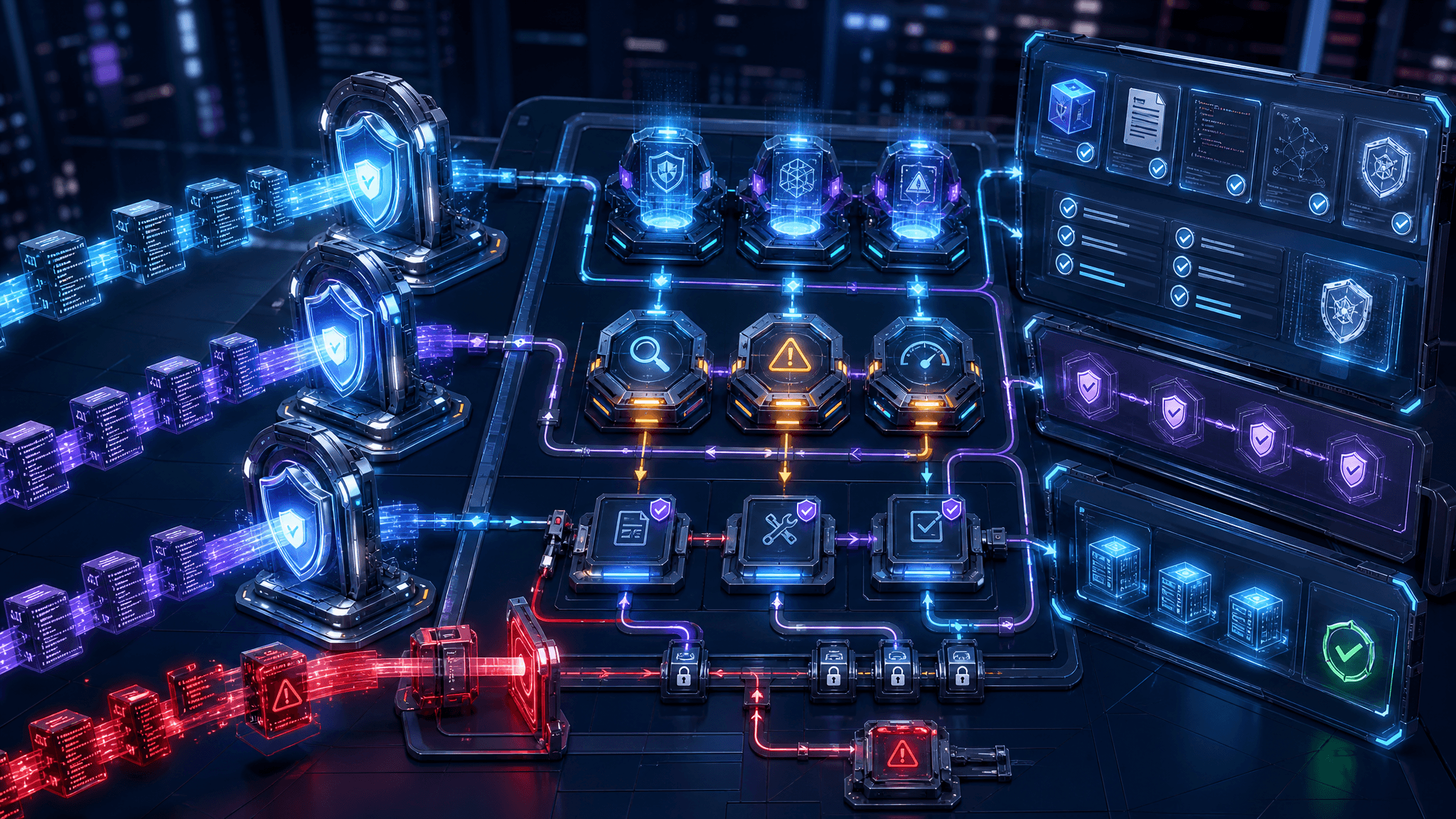
Secure SDLC is no longer about having a nice document in Notion and a scanner in CI. It is about building a response loop that can absorb a much higher volume of findings without collapsing into chaos.
Defensive workflow quality becomes the real moat
Detection is not enough. Everyone is about to learn that the hard way.
If AI can generate more plausible findings, the bottleneck moves downstream:
- validation
- deduplication
- severity assignment
- ownership routing
- patch verification
- deployment evidence
- exception handling
That is why audit trails matter so much now. A team that cannot connect a finding to a ticket, code change, review step, test result, and release artifact does not have a security workflow. It has a pile of alerts dressed up as process.
Project Glasswing makes defensive maturity a builder problem because the workflow itself becomes part of the security posture. Sloppy handoffs, vague ownership, and mystery exceptions get a lot more dangerous once model-speed discovery becomes normal.
Why the broader industry response matters
Anthropic is not the only one saying this. Microsoft's public writeup reinforces the defensive side, and Infosecurity Magazine's coverage highlights the same risk tension that a lot of teams would rather ignore: Anthropic does not plan to make Mythos Preview public, but plenty of people in security are openly skeptical that capabilities this strong stay neatly contained forever.
That skepticism is rational.
Once one frontier lab demonstrates this level of autonomous vulnerability work, everybody else in the industry has to assume comparable capability will spread. The question stops being whether builders will deal with AI-assisted exploit discovery. The question becomes whether they will harden their workflow before the capability is common.
My blunt read
Project Glasswing is a warning label for the entire AI coding boom.
Yes, frontier models will help teams write code faster. Yes, they will help teams reason about bigger systems. Yes, they will tighten feedback loops.
They will also make vulnerability discovery and exploit development much stronger.
So the winning builder posture now looks pretty obvious:
- treat secure SDLC as a core engineering system
- move security review earlier in the lifecycle
- make remediation traceable end to end
- verify fixes with evidence, not vibes
- keep humans in the loop where severity and release judgment matter
- assume old code debt is active risk, not a someday problem
The productivity upside is real. The exploit upside is real too.
If your team only planned for the first one, Project Glasswing is your notice that the second one is already here.

Sources: Anthropic Project Glasswing, Anthropic Frontier Red Team on Claude Mythos Preview, Microsoft Security Response Center, Infosecurity Magazine