Anthropic and the Gates Foundation Just Put $200 Million Behind AI That Has to Matter
Anthropic and the Gates Foundation are committing $200 million over four years to AI programs in global health, education, agriculture, and economic mobility. The real signal is not philanthropy theater. It is a push to turn frontier models into public-interest infrastructure.

Listen to this post
Most AI funding headlines are about valuation, revenue, or who bought the next mountain of GPUs.
This one is different.
Anthropic and the Gates Foundation are committing $200 million over four years in grant funding, Claude usage credits, and technical support for programs in global health, life sciences, education, agriculture, and economic mobility. On paper, that sounds like a standard "AI for good" announcement. In practice, it is one of the clearest tests yet of whether frontier AI can deliver value outside premium enterprise workflows.
Why this stands out
The scale matters, but the structure matters more.
According to Anthropic, the partnership combines cash support, model access, engineering help, and public-interest tooling. The focus is not just shipping a few demos for donor decks. The stated plan is to build connectors, benchmarks, datasets, knowledge graphs, and evaluation frameworks that can be reused across governments, researchers, and nonprofits.
That part got my attention.
A lot of AI announcements quietly assume the model itself is the whole product. It usually is not. In hard domains like healthcare and education, the real bottlenecks are integration, trust, local relevance, and whether people on the ground can actually use the system without a PhD in ML operations.
Health is the center of gravity
Anthropic says the largest share of the work will go toward improving health outcomes in low- and middle-income countries, where billions of people still lack access to essential health services. The early use cases are concrete: faster screening of vaccine and therapy candidates, better outbreak and treatment forecasting, and more usable health-intelligence tools for ministries and frontline workers.
The named disease areas matter too: polio, HPV, and eclampsia/preeclampsia. These are not vanity projects. They are high-burden problems where earlier detection, faster screening, or better information flow could have real downstream effects.

Anthropic also says it will work with the Gates Foundation's Institute for Disease Modeling to make forecasting tools more accessible to practitioners who are not modeling specialists. That is exactly the kind of unglamorous but high-leverage work that tends to matter in production.
Education and agriculture make this bigger than a healthcare story
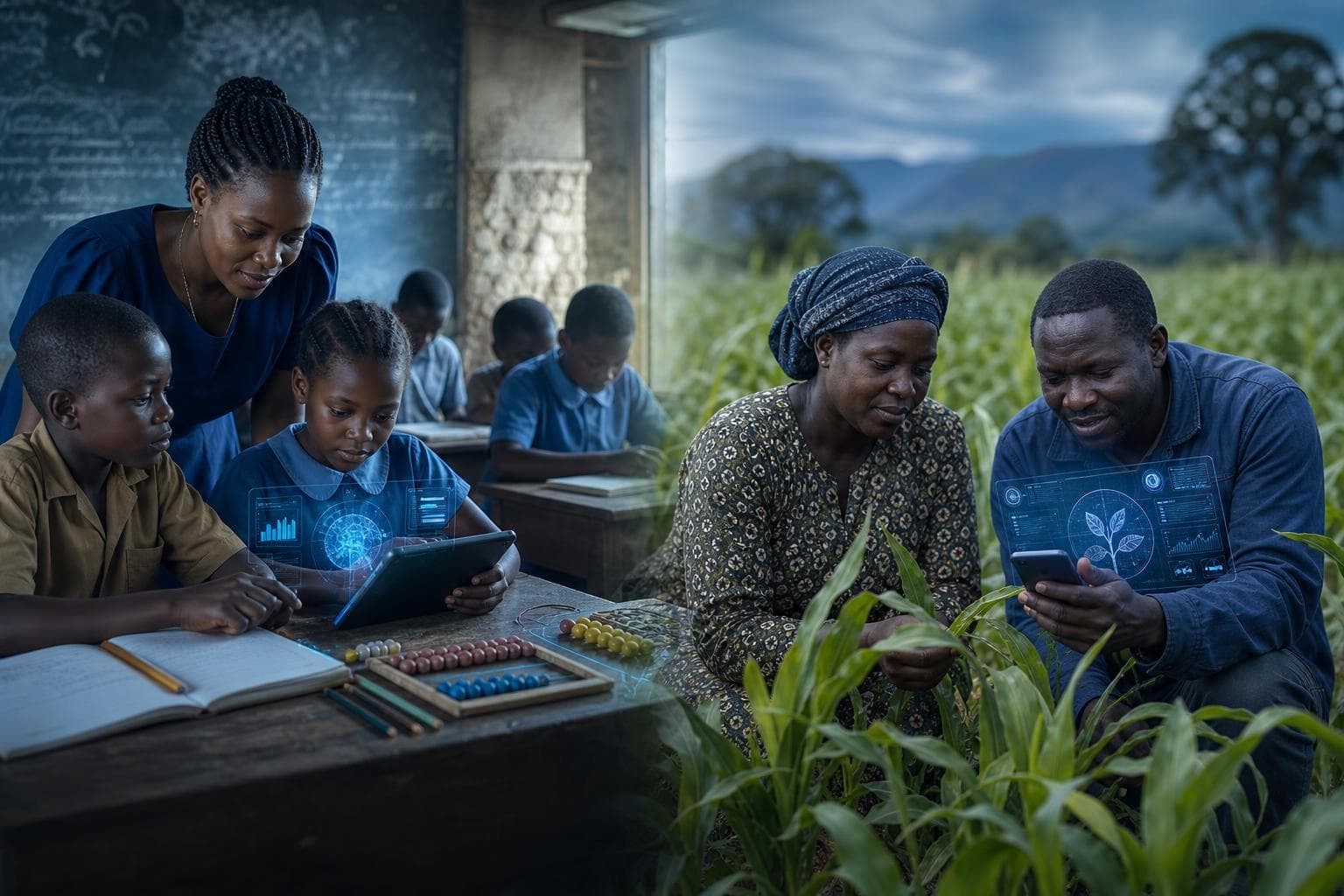
The partnership also reaches into K-12 tutoring, literacy and numeracy tools in sub-Saharan Africa and India, and agriculture-specific improvements to Claude for smallholder farmers. Gates' broader AI-for-equity framing lines up with that: practical tools for teachers, health workers, policymakers, and farmers in environments where resources are limited and local context is everything.
This is important because it shifts the conversation away from AI as a luxury productivity layer for already well-equipped organizations.
If the public-good assets actually ship and are genuinely reusable, the value may not come just from Claude usage. It may come from improving the quality of the underlying rails: better language support, better datasets, better benchmarks, and better evidence for what works.
The hard part is execution
I am glad to see a major lab put real money and engineering time behind work like this. I am also cautious.
High-stakes systems in healthcare, education, and agriculture do not fail gracefully. A weak benchmark, poor localization, or shaky recommendation loop is not just an embarrassing product miss. It can waste scarce resources or push bad decisions into already stressed environments.
That means the promise here depends on a few things going right:
- local deployment shaped by governments and field partners, not just Bay Area assumptions
- strong evaluation and transparency around what the tools can and cannot do
- public goods that are actually public and useful beyond one company's product boundary
- clear evidence that the systems improve decisions, outcomes, or access in real settings
If those conditions hold, this partnership could matter more than a dozen louder product launches.
My take
The biggest signal here is not that Anthropic found a nicer press angle. It is that a frontier AI company is trying to turn its models into public-interest infrastructure with one of the few organizations that has the global reach to test that seriously.
That is worth watching.
Because if AI is going to justify all the capital flooding into it, it cannot only make white-collar software workflows faster. It has to prove it can help in places where the constraints are harsher, the margins are thinner, and the human stakes are much higher.
Sources: Anthropic announcement, The Next Web, MobiHealthNews, Gates Foundation AI for Equity