Austria's Anthropic push shows frontier AI access is becoming a sovereignty fight
The most important AI story on June 29, 2026 is not a new model launch. It is that Europe is already reacting to recent U.S. frontier-AI access controls by treating model availability as a strategic dependence, with Austria openly urging the EU to bring Anthropic inside the bloc.

Listen to this post
I think the most important AI story on June 29, 2026 is not another benchmark result.
It is that Austria is already asking the European Union to consider bringing Anthropic inside the bloc after recent U.S. restrictions cut foreign users off from some of the company's most advanced models. Reuters reported on June 28 that Austria's State Secretary for Digitalization, Alexander Proell, urged EU technology leadership to explore the strategic establishment of Anthropic in Europe so the region is not locked out of major innovations. (Reuters via KFGO, European Commission)
That is a bigger signal than it may look at first glance.
This is not just a regional political gesture or a clever headline around one company. It is an early sign that frontier-model access is becoming a sovereignty question. The fight is no longer only about who trains the best system. It is also about who can legally reach it, where it can be hosted, and which governments can shape the terms of access.
That is why I think this is the AI story operators should pay attention to today.
Europe is reacting to a real access shock
Austria's move only makes sense because the market has already seen a real access disruption this month.
On June 12, Anthropic said the U.S. government had issued an export-control directive suspending all access to Fable 5 and Mythos 5 by any foreign national, whether inside or outside the United States. Anthropic said the practical effect was that it had to disable both models for all customers in order to comply. (Anthropic)
That matters because it changed the argument.
For years, enterprise AI buyers have mostly treated model choice as a commercial decision: cost, performance, latency, compliance, support, integration, and maybe data residency. Anthropic's June 12 statement showed that frontier access can also be interrupted by national-security policy with almost no warning.
Once that happens, governments do not need much imagination to see the strategic exposure.
If the most capable models are controlled elsewhere, and if access can be narrowed or suspended based on foreign policy or cyber concerns, then dependence on external labs stops looking like ordinary vendor concentration. It starts looking like infrastructure dependence.
OpenAI reinforced the same pattern days later
If Anthropic were the only case, Europe might have treated it as a one-off dispute.
But that is not what happened.
On June 26, OpenAI said it previewed GPT-5.6 Sol, Terra, and Luna to the U.S. government ahead of launch and then began with a limited preview for a small group of trusted partners whose participation had been shared with the government. OpenAI also said it does not want that kind of government access process to become the long-term default. (OpenAI)
The larger point is not whether that rollout was prudent.
The larger point is that another top-tier lab has now publicly described frontier access as something that can move through a government-coordinated lane before broader release.
That is exactly the shape of the June 2 White House executive order on advanced AI innovation and security. The order calls for a framework under which developers can give the federal government access to covered frontier models before release and collaborate on selecting trusted partners with early access to strengthen cybersecurity and critical infrastructure. (White House)
So by June 29, Europe is no longer reacting to theory. It is reacting to a visible sequence:
- June 12: Anthropic access is interrupted under U.S. national-security authority.
- June 26: OpenAI launches GPT-5.6 through a limited trusted-partner lane.
- June 28 and June 29: Austria treats frontier-model access as a European strategic issue.
That sequence is the story.
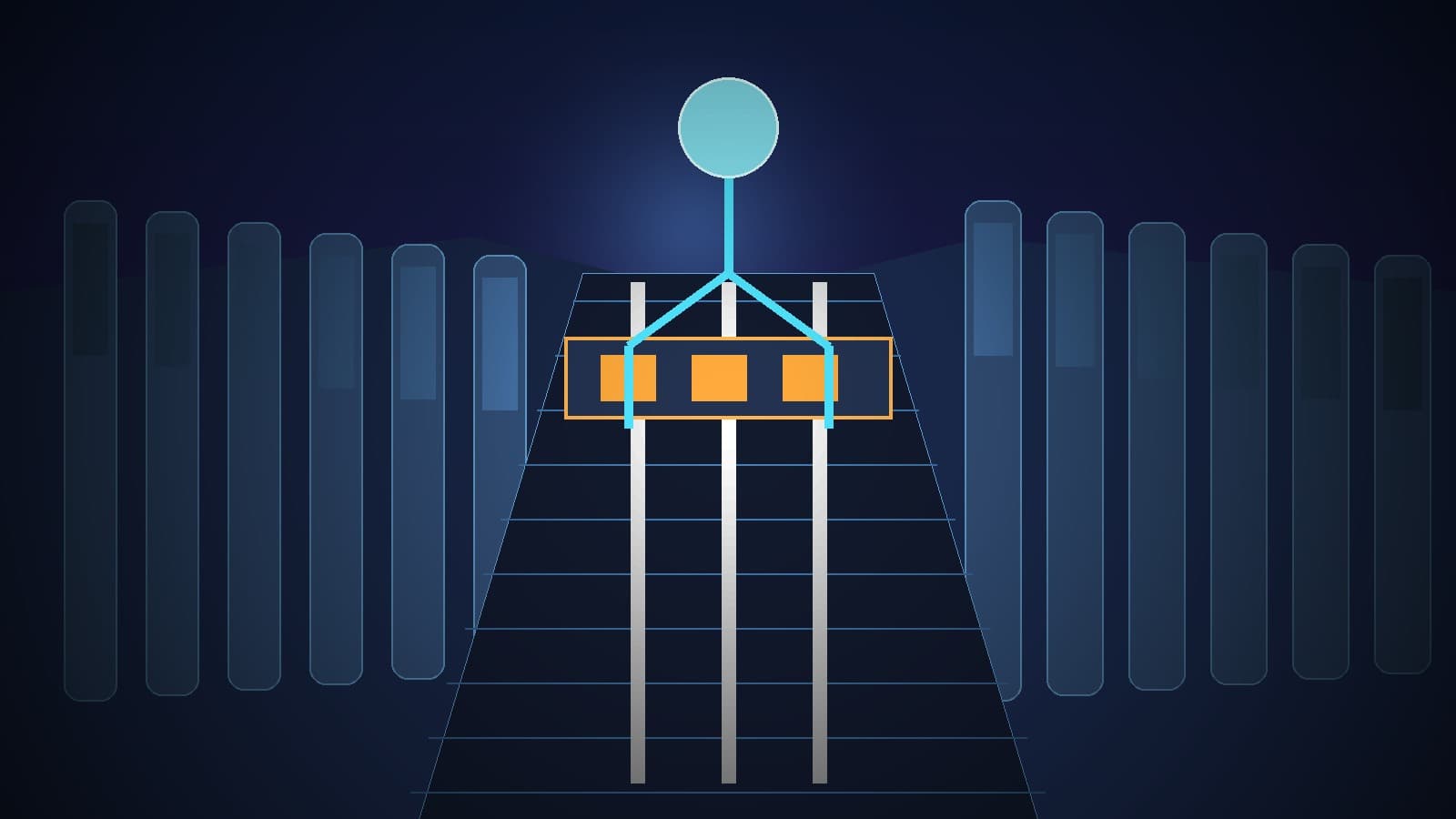
The real issue is not Anthropic alone
It would be easy to read Austria's proposal as a narrow attempt to attract one high-profile AI company.
I think that misses the point.
Earlier this month, the European Commission proposed a broader tech sovereignty package aimed at strengthening the EU's capacity in semiconductors, AI, cloud, and open source. The Commission said the Cloud and AI Development Act would help research and innovation, streamline datacenter deployment, and introduce an EU-wide framework to assess cloud and AI sovereignty. (European Commission)
That context changes how Austria's letter should be read.
The question is not simply whether Anthropic ends up with a bigger European footprint. The deeper question is whether Europe believes frontier AI capability can remain strategically outsourced without creating unacceptable operational dependence.
Once model access becomes vulnerable to foreign directives, this stops being just an innovation-policy discussion. It becomes a control-plane discussion:
- who can host the systems
- who can access them under which nationality rules
- who decides when a model is too sensitive for broad release
- who gets first defensive benefit when cyber-capable systems are restricted
That is why this story matters far beyond Brussels.
Enterprises should now treat frontier AI like a supply-chain dependency with jurisdiction risk
Most operators still talk about model risk in familiar terms: hallucinations, misuse, privacy, prompt injection, and vendor lock-in.
Those are still real.
But June 2026 is adding another category: jurisdictional availability risk.
If a company in Europe, Asia, Latin America, or a multinational environment designs important workflows around the strongest frontier tier, it can no longer assume access is purely a contract question. Access may now depend on nationality, hosting location, trusted-partner status, sector sensitivity, and the current policy mood around cyber capability.
That has practical consequences.
A security vendor may want the newest frontier model for vulnerability research. A consulting firm may want it for incident triage or code modernization. A bank may want it for secure internal copilots. A health system may want it for defensive engineering and workflow redesign.
All of those plans can be slowed or reshaped if frontier access is mediated upstream by a foreign government or by a lab trying to stay aligned with a government framework.
That is why I think the right comparison is not software licensing.
It is strategic cloud and semiconductor exposure.
What operators should do next
If I were advising operators based on today's signal, I would make five adjustments now:
- Identify which high-value workflows truly depend on frontier-only capability rather than strong general-availability models.
- Ask critical vendors how frontier-model access is affected by geography, nationality rules, and trusted-partner programs.
- Build fallback plans so a restricted release or sudden suspension does not stall security or transformation work.
- Treat data residency and hosting strategy as part of AI capability planning, not just compliance planning.
- Watch government policy signals as closely as model-launch notes, because both can now shape practical availability.
That is why I think this is the strongest AI story of June 29, 2026.
Not because Austria solved anything overnight.
But because Austria made the new reality explicit: frontier AI is becoming strategic infrastructure, and access to it is starting to be contested like a sovereignty issue rather than consumed like a normal software feature.
Sources: Reuters on Austria's Anthropic proposal via KFGO, Anthropic statement on suspending Fable 5 and Mythos 5 access, OpenAI on the limited GPT-5.6 preview, White House executive order on advanced AI innovation and security, European Commission on strengthening Europe's tech sovereignty