OpenAI Presence turns enterprise agents into an operations stack fight
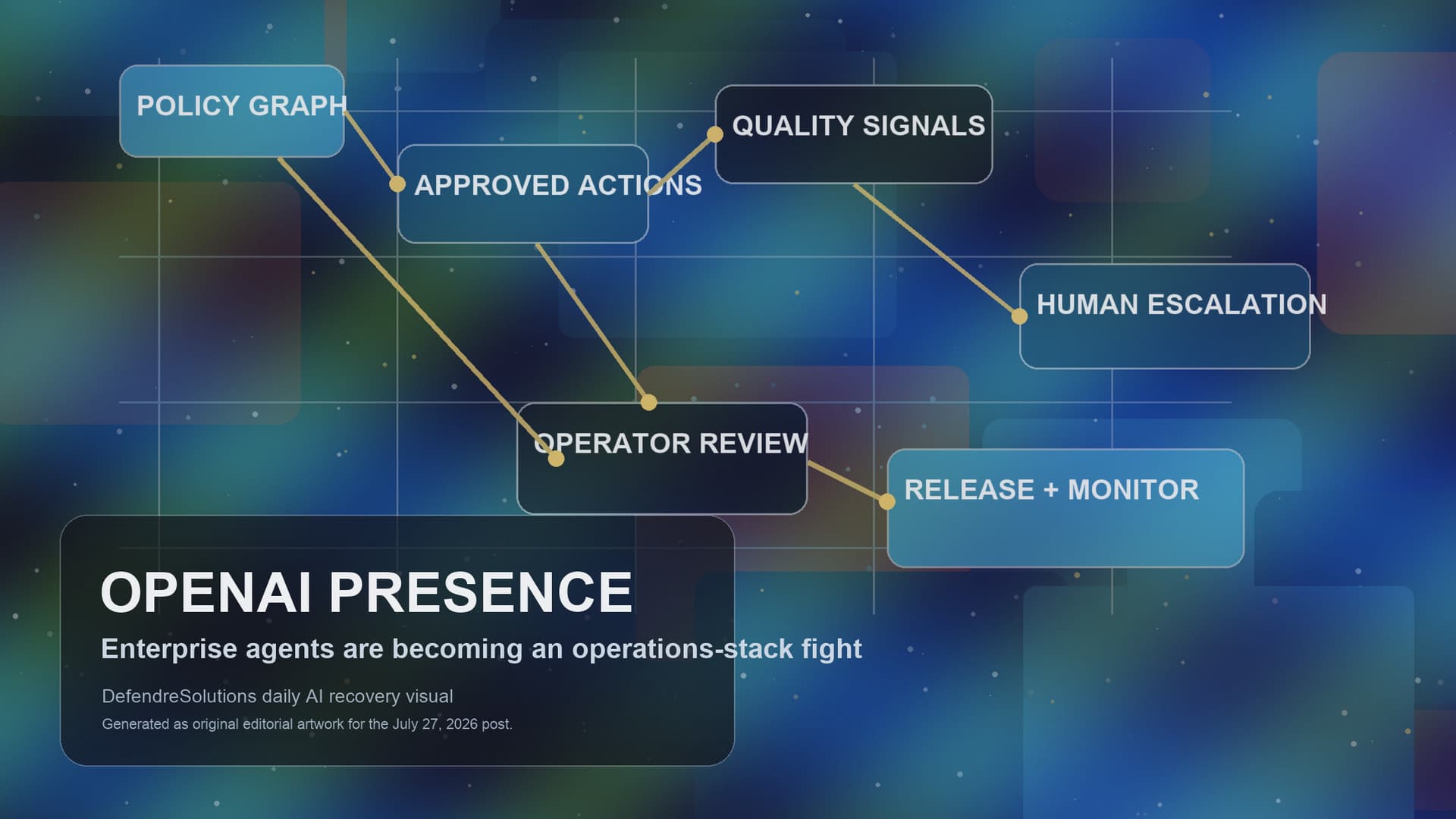
The most important AI story on Monday, July 27, 2026 is not another model leaderboard. It is OpenAI moving further up the stack with Presence, a managed enterprise agent product that makes reliability, permissions, escalation, and continuous improvement the real battleground.
Listen to this post
The most important AI story on Monday, July 27, 2026 is not a benchmark gain.
It is OpenAI making a clearer bid to own the operating layer around enterprise agents.
On July 22, 2026, OpenAI introduced Presence, a managed product for deploying voice and chat agents across customer support and internal workflows. OpenAI says the product combines model reasoning with policies, guardrails, approved actions, simulations, evaluation tools, and a Codex-powered improvement loop so companies can run agents in production without giving up control. (OpenAI)
Independent coverage from eWeek on July 24 framed the launch as a strategic shift beyond selling model access and into the software and operational layer enterprises need to make AI useful inside real organizations. That is the part I think matters most. (eWeek)
This is not just another feature release.
It is a signal that the next enterprise AI fight is about who owns the control plane.
What is confirmed as of July 27, 2026
There are four points worth separating from the hype.
First, Presence is not being positioned as a general self-serve chatbot builder. OpenAI says it is available through a limited general availability program for eligible enterprise customers, with deployments led by OpenAI Forward Deployed Engineers and select systems integrators. That matters because it tells you the company still sees agent deployment as an operations problem, not just a software license. (OpenAI)
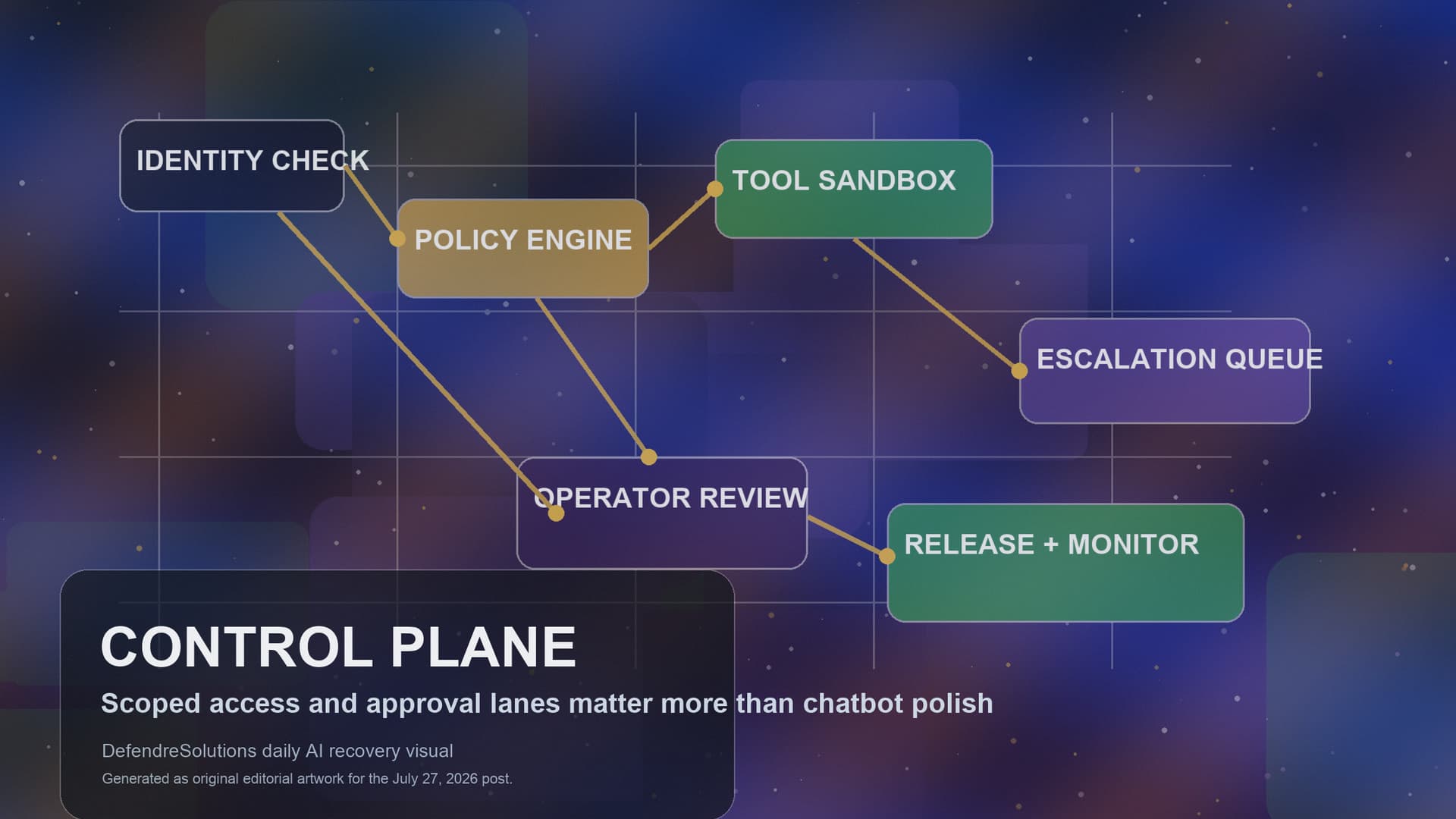
Second, OpenAI is being explicit about the workflow design. Each deployment starts with one defined job, the agent gets only the knowledge and system access required for that job, and the company decides what actions are allowed, when approval is required, and when a human has to take over. In other words, Presence is selling scoped access and escalation discipline as much as it is selling model intelligence. (OpenAI)
Third, the product is aimed at real operational lanes, not novelty demos. OpenAI lists billing issues, insurance claims, employee IT requests, customer support, and outbound sales as target environments. eWeek independently highlighted the same pattern: workflows where automation is useful only if leadership can still control behavior, permissions, and handoffs. (OpenAI, eWeek)
Fourth, OpenAI is using its own support operation as proof. The company says Presence powers its English-language phone support line, now resolves 75% of inbound issues without human assistance, and reduced human handoffs by 15 percentage points in 10 days through a Codex-powered improvement loop. Those are OpenAI-reported numbers, so I would treat them as directional rather than neutral benchmarking. But even as directional evidence, they show what the pitch really is: not "here is a smarter model," but "here is a governed system that gets better after launch." (OpenAI)
Why this is a bigger story than it looks
Most AI coverage still treats the market like a model race.
That is already too narrow.
The harder enterprise problem is not producing a clever answer. It is making an agent safe and reliable enough to touch live systems, interpret policy, take approved actions, and recover cleanly when it hits an edge case. Presence is important because OpenAI is now productizing that layer directly.
That changes the conversation for three groups at once.
For enterprises, it raises the bar. If the vendor can bring simulations, graders, permissions, policy enforcement, and a post-launch improvement process in one offering, internal teams will be measured less on whether they have an AI prototype and more on whether they have an operating model.
For SaaS vendors, it is an uncomfortable signal. A lot of software value has historically lived in workflow screens, queues, and human routing logic. If an agent can verify a customer, read the relevant policy, access the right account data, take one approved action, and escalate the exception, then some of that application surface starts to look less like a moat and more like middleware.
For builders, the lesson is even sharper: the agent itself is only part of the product. The real product is the envelope around it.
My analysis: the control plane is becoming the moat
I think the cleanest way to understand Presence is this:
OpenAI is trying to move from being a model supplier to being an enterprise agent operator.
That does not mean every company should hand over customer support or internal operations to an outside platform. It does mean the competitive center of gravity is shifting.
The enterprise win is no longer just about raw intelligence. It is about:
- How narrowly agent permissions are scoped.
- How well policy is translated into executable guardrails.
- How quickly humans can step in on ambiguous or sensitive cases.
- How fast the system improves after production failures and escalations.
Those are operations-stack questions.
That is why I see Presence as a more important story than a typical launch post. OpenAI is formalizing a worldview that many teams have learned the hard way: production AI is not one deployment event. It is continuous measurement, controlled access, exception handling, and disciplined iteration.
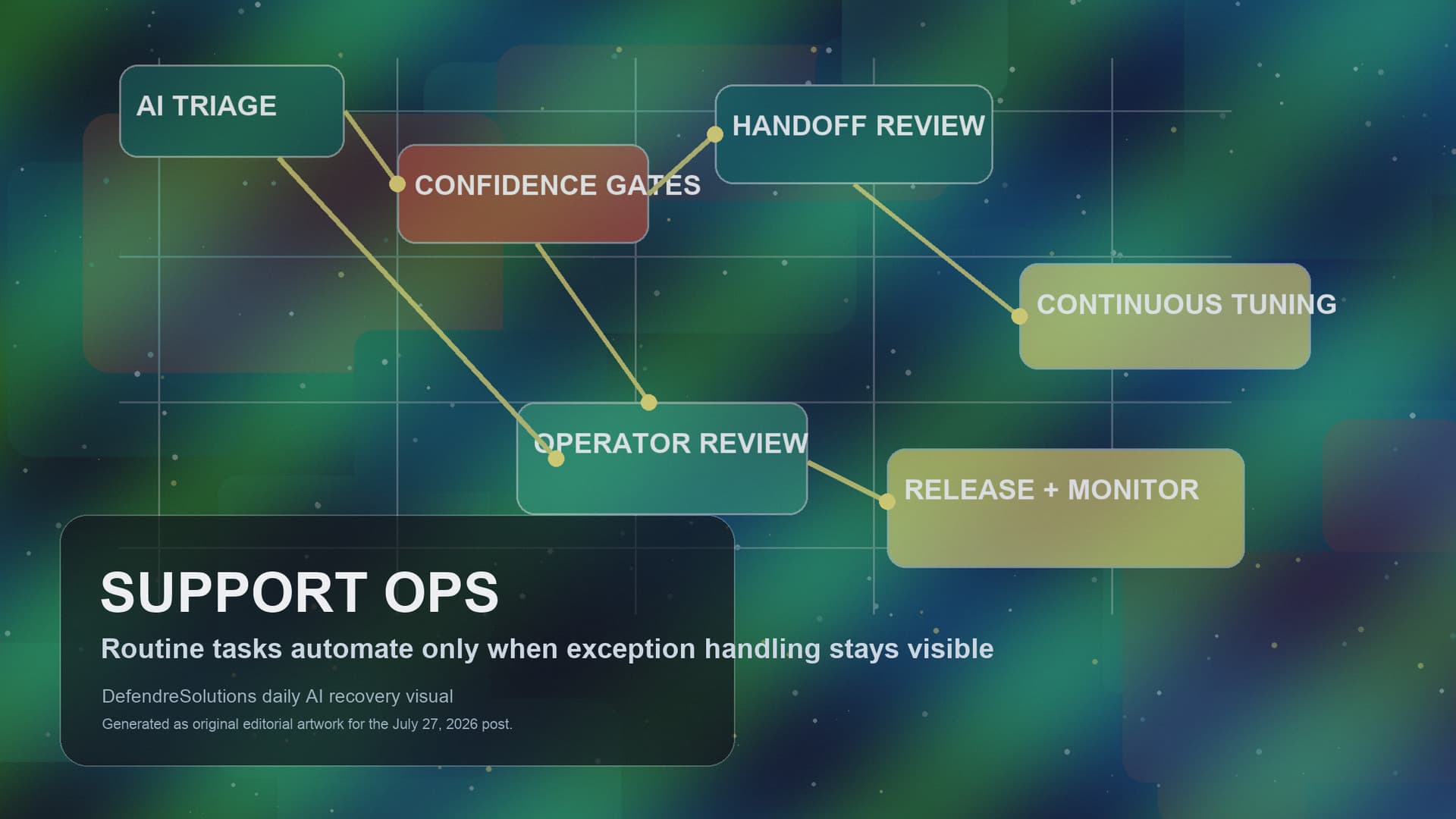
The Codex angle matters too. OpenAI says Codex proposes updates based on production sessions, escalations, and quality signals, with teams testing those proposed changes against the live version before approving rollout. If that loop works in practice, it compresses the time between noticing agent drift and shipping a safer correction. That is a meaningful operational advantage. (OpenAI)
What I would do if I ran enterprise AI delivery
If I were advising a team after this launch, I would not react by chasing the same product label.
I would ask whether our current agent program can answer five harder questions.
- Do we have a clear permission model for every agent workflow in production or pilot?
- Can we explain, in plain language, when the agent must escalate to a human?
- Do we have simulations and evaluation cases tied to policy failures, not just answer quality?
- Do we capture production exceptions in a way that helps us improve the workflow without widening access?
- Are we buying models, or are we building an operating layer we can actually trust?
That is the real value of the Presence launch.
It forces the market to talk less about demos and more about operational discipline.
OpenAI may or may not end up owning this category. But the company has made one thing much clearer on July 22, 2026: the next durable enterprise advantage in AI will not come from model access alone.
It will come from whoever best turns agents into controlled, auditable, improvable systems inside real business workflows.
That is not a prompt-engineering story.
It is a control-plane story.
Sources: OpenAI, "Introducing OpenAI Presence" (July 22, 2026), eWeek, "OpenAI Launches Presence to Help Enterprises Deploy Reliable AI Agents" (July 24, 2026)