Claude's next bottleneck is a Texas power deal, not a benchmark
The most important AI story on Tuesday, September 1, 2026 is not another model launch. It is a reported $35 billion Lambda cloud deal that puts Claude capacity on a thicker Nvidia-centered corridor, which turns model choice into an infrastructure bet.
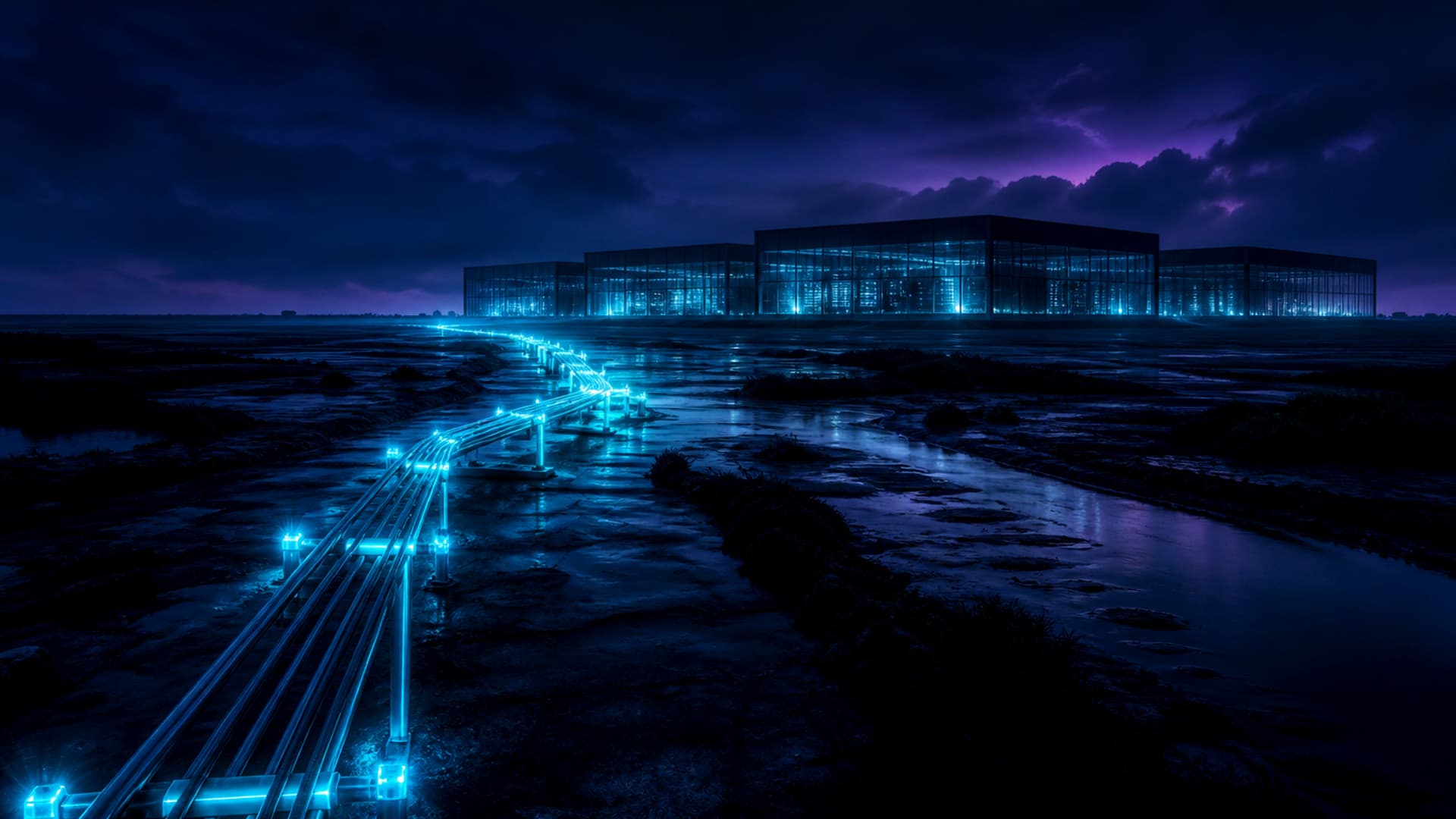
The most important AI story on Tuesday, September 1, 2026 is not another model launch.
It is a reported cloud deal that turns Claude availability into a corridor question. Reuters, citing a source familiar with the matter, says Anthropic signed an about $35 billion cloud-computing agreement with Lambda, a provider backed by Nvidia, for Nvidia-powered capacity at a Texas data center. For a small team that already ships on Claude, or that runs coding agents through Claude Code, model choice is no longer just a quality dropdown. It is a bet on who holds the power, the lease, and the chips behind the API.
Yesterday's field note was the EU putting ChatGPT in the Digital Services Act search-engine tier. One sentence is enough. Today's file is the compute stack under the other lab a lot of us actually code against.
What the reporting actually says
I am staying with what the wire copy confirms, and I am labeling what it does not.
The Reuters story, dated August 31 and republished this morning, says Anthropic signed a $35 billion cloud-computing deal with Lambda for a Texas data center. The project is being developed in Nueces County by Hut 8, the crypto-mining company that has moved into AI halls. The same anonymous source puts the site at about 350 megawatts. The source spoke on condition of anonymity because the information is not public. (Reuters via The Star, Reuters)
Anthropic, Nvidia, Hut 8, and Lambda did not immediately respond to Reuters outside regular business hours. I have not seen a joint press note, a filing, or a numbered confirmation from any of the four. Gadgets Now, summarizing the Wall Street Journal and Reuters, makes the same point: treat the $35 billion figure as reported until a company says it in public. (Gadgets Now)
The Wall Street Journal first reported the deal. Reuters says the Journal's framing is that Nvidia itself would hold the lease on the data center. That is the load-bearing structural claim. Lambda is the cloud vendor Anthropic is buying from. Nvidia is not only the chip brand on the floor. In this telling it also sits on the lease. (Reuters via The Star)
Reuters also puts the deal next to Claude demand, including coding. It says IPO-bound Anthropic has been expanding compute to meet growth it expects for products such as Claude Code, and that the Lambda agreement would bring Nvidia capacity online for Claude. That is the operator sentence. This is not a benchmark drop. It is a capacity purchase, if the reporting holds. (Reuters via The Star)
Two pieces of site background belong in the same folder, and they are not the same contract. Hut 8 said in July it had signed a 15-year lease with an "investment-grade customer," with a base-term contract value of about $19.6 billion. The Financial Times later reported that Nvidia was the tenant for Hut 8's 1-gigawatt Beacon Point campus. Reuters repeats both as context. I am not adding those numbers together with the $35 billion Lambda figure, and I am not treating the July lease as proof of today's headline. (Reuters via The Star)
There is a second corridor from last week. Reuters notes that Anthropic said it will spend about $45 billion to rent AI cloud power from Nscale's West Virginia campus. CNBC separately confirmed a roughly $45 billion Nscale agreement, with about 460 megawatts at a West Virginia development expected online around the end of 2027. That is useful context. It is not this morning's Texas deal. (Reuters via The Star, CNBC)

Why this is a small-team story
You are not going to diligence Hut 8's megawatts. That is not the point.
The usable file is not "Claude is about to go down." A reported offtake does not change your rate limit this afternoon. If the deal is real, it is meant to add Nvidia capacity, not subtract it. If the deal is late, smaller, or never confirmed, you still have the same product you had yesterday.
What changed is the shape of the dependency. Claude already sits on a thicker Nvidia-centered stack: Lambda in the middle, Nvidia chips on the floor, and, in the Journal's telling, Nvidia on the lease. Last week's Nscale rent sits in the same folder. For a five-person shop, that is vendor concentration wearing a data-center costume. Availability, pricing pressure, and coding-agent capacity now ride corridors you do not control and cannot inspect from an API dashboard.
Keep a second provider in the same workflow. A delayed hall, a tighter allocation, or a price step that only shows up on the invoice should not strand the product. Yesterday's note was about a rulebook around a consumer assistant. This one is about the power deal under the model you already treat as a utility.
My analysis: the corridor is the load-bearing object
I do not think a small team should pretend it can model Texas interconnection or Lambda's GPU book. You will not get a better compiler out of that. You can copy the split the reporting is forcing.
A model is one object.
A corridor is another.
Those can live in the same product. They are not the same file. Once Claude Code demand is the reason a lab is stacking Nvidia leases in Texas and West Virginia, the bottleneck is no longer "did the evals move." It is who can energize halls, who holds the lease, and how many of your tickets die if that stack hiccups.
If your vendor memo lists price, latency, and a safety page, and has no line for "what we do if Anthropic capacity or pricing moves," you are not doing procurement. You are doing shopping. Shopping is fine until a customer asks whether the coding agent in the demo can survive a corridor shift, and the only answer you have is "we like Claude."
I would rather be slightly boring here. Write down which workflows hard-depend on Claude. Write down which jobs already run fine on another lab. Write down what you would do if context windows stayed the same and the invoice or the queue did not. Update it if Anthropic, Lambda, or Nvidia actually publish terms. That is a one-page file. It is also the difference between a headline and a plan.

What I would do if I shipped on Claude this week
I would not rip Claude out because a $35 billion number landed in a newspaper.
I would open the real product list and mark every workflow that cannot survive a sudden Claude change: a capacity squeeze on Claude Code, a price step on the API, or a buyer who asks what sits under the model besides a brand. I would turn on a second provider in that same workflow and run last week's tickets through it once, so the fallback is not a weekend fantasy.
I would also ask the vendor question I should have asked when the API became load-bearing. What is the written posture on capacity, allocation, and where coding-agent demand sits relative to the rest of Claude? If the answer is only "we signed a big cloud deal," I would treat that as a gap, not a comfort. I would keep using Claude where it is the right tool. I would stop treating a reported Texas corridor as a substitute for a second lane.
None of this requires you to pick a side between Anthropic and Nvidia. The Journal and Reuters say a $35 billion Lambda agreement is in place and that Nvidia would hold the lease. The companies have not confirmed it in public. Both of those sentences can be true enough for a small team to keep shipping while it writes its own page.
If you want help turning that into a real operating setup, start a project conversation.
Sources: Reuters, "Anthropic signs $35 billion cloud deal with Nvidia-backed Lambda, source says" (August 31, 2026), via The Star (September 1, 2026), Reuters original, Gadgets Now / Times of India explainer (September 1, 2026), CNBC, "Anthropic and Nscale strike $45 billion cloud deal, sources say" (August 26, 2026)