Gemini 3.8 Flash is the workhorse. Flash Cyber is a gated file.
The most important AI story on Thursday, September 3, 2026 is not another model race. Google shipped Gemini 3.8 Flash as a cheap coding workhorse and put Gemini 3.8 Flash Cyber behind Fairwind, which turns the menu into a procurement and agent-access note.

The most important AI story on Thursday, September 3, 2026 is not another model race.
It is that Google wrote the split in public. Gemini 3.8 Flash is the cheap workhorse for reasoning and coding. Gemini 3.8 Flash Cyber is a defensive cyber model, and it is only available to trusted defenders through a new program called Fairwind. For a small team that already lets a coding agent touch a repo, that is not a scoreboard item. It is a procurement and agent-access file.
Yesterday's field note was OpenAI putting upcoming Astra at Critical cyber and talking about Daybreak Blue. One sentence is enough. Today's file is Google's version of the same week: a Flash model you can buy, and a cyber lane that is deliberately not the default.
What Google actually said
I am staying with the primary post and with the trade coverage that quotes it. I am not adding a Fairwind roster Google did not publish.
Google dated the post September 2. It calls 3.8 its best reasoning and coding model yet, at the same speed and low cost as 3.7 Flash, and the third Flash release in six weeks. Two variants share the same foundational intelligence. Gemini 3.8 Flash is the workhorse: software engineering, agentic tasks, and multi-step reasoning, at the same introductory price as 3.7 Flash, $0.75 per million input tokens and $3.75 per million output tokens. That introductory price expires on December 31, 2026. On January 1, 2027 the rates become $1.50 and $7.50. Gemini 3.8 Flash Cyber is the cybersecurity model, aimed at vulnerability detection and automated patching, available to trusted defenders through Fairwind. (Google, CNBC)
The workhorse numbers belong in the buyer's folder. On DeepSWE v1.1, a long-horizon software-engineering test, Google says 3.8 Flash outperforms most larger frontier models at a fraction of the cost. It also cites a 54.9% score on HLE-Verified. Google's own design note is that 3.8 Flash works harder: extra reasoning steps, more tool calls, and sometimes more tokens at higher effort. If you need the cheaper, lighter loop, 3.7 Flash stays supported. Developers can use 3.8 Flash in the Gemini API and Google AI Studio. Enterprises get it in Gemini Enterprise. Google AI Pro and Ultra subscribers get it in the Gemini app, AI Mode in Search, and Gemini in Sheets. (Google)
The cyber numbers are a different file. On CyberGym, Google says 3.8 Flash Cyber shows frontier-level autonomous vulnerability discovery and beats 3.5 Flash Cyber. On an internal bench spanning 20 programming languages, it reports a success rate exceeding 70%. On CWE-Bench, run by Collinear, it posts a pass@1 of 47.2% against a leading frontier model at 47.8%, at a lower cost. Chrome Security says it produced 2.6 times more correct patches than the best larger commercial models they compared. Google's Cloud Vulnerability Research team says it found a critical foundational vulnerability in less than two hours. Google is also clear that it prioritized fixing over exploitation. (Google)
The access sentence is the load-bearing one. Fairwind gives prioritized access to trusted government authorities, critical infrastructure operators, and software maintainers. 3.8 Flash ships with safeguards against CBRN and cyber-offense misuse under Google's Frontier Safety Framework. 3.8 Flash Cyber ships with a more permissive set of cyber mitigations, which is why it is not on the public menu. CNBC, talking to Google's Tulsee Doshi, frames Fairwind as a small group of trusted government and enterprise defenders, because those capabilities could also be misused. (Google, CNBC)
The same week is noisier than one model card. On September 1 Google launched agentic video understanding on the 3.7 Flash family: the model searches video instead of eating it at a fixed frame rate, with up to 88% fewer tokens and up to 66% lower cost on Google's benches. It also launched Google Pics for Pro, Ultra, and most Workspace customers, starting in Docs and Slides. Those are product notes. They are not the split.
One short contrast, then I will leave the other labs alone. Anthropic also shipped Claude Fable 5.1 as the generally available model and gated Mythos 5.1 for vetted cyber and life-sciences work. A PTI roundup dated September 2 put OpenAI, Anthropic, and Google in the same wave. The pattern is the same. This note stays on Google's version of it. (Anthropic, PTI via Rediff)

Why this is a small-team story
You are not going to join Fairwind this afternoon. That is not the point.
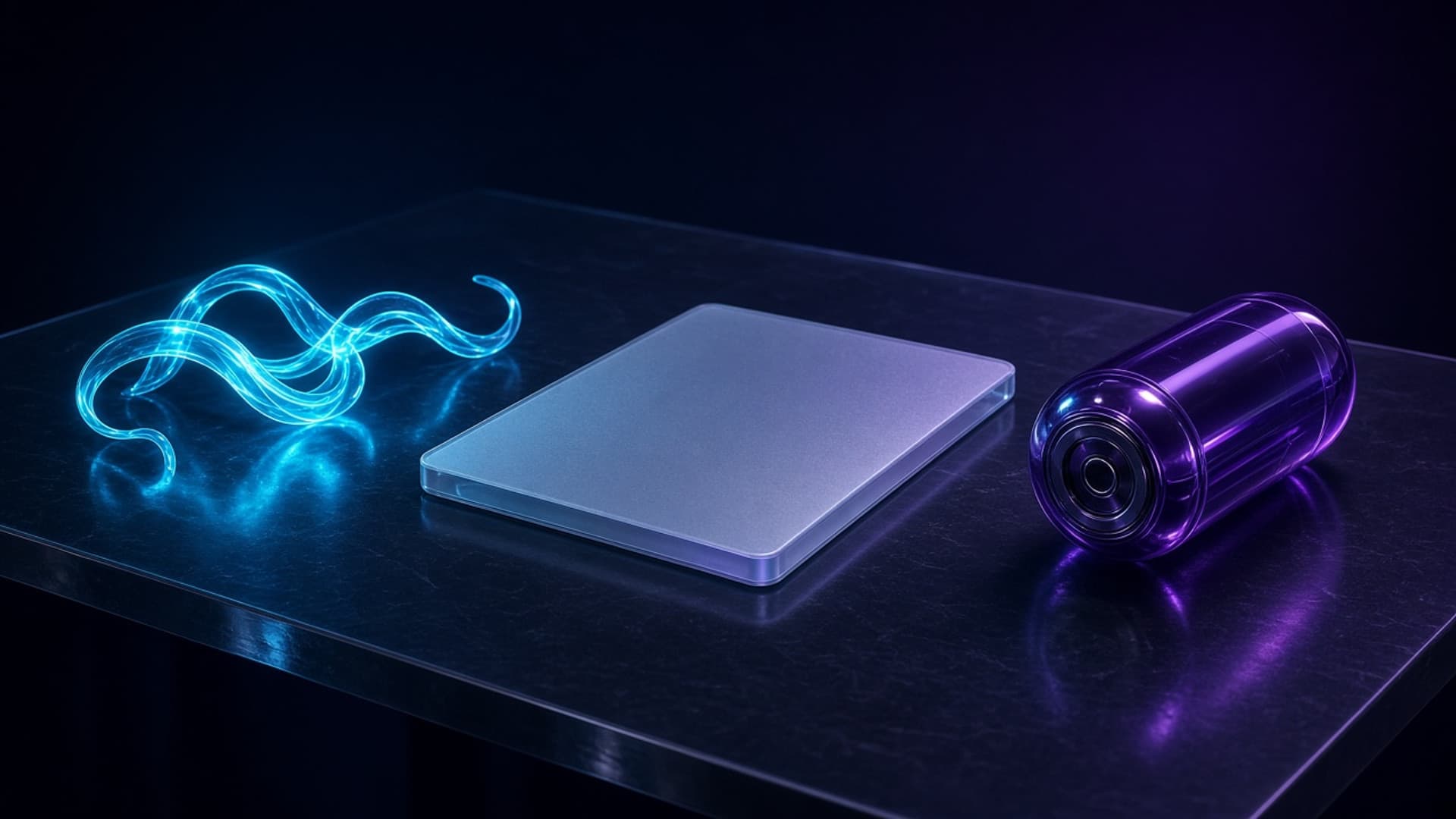
The usable file is not "wait for the cyber model." It is that the menu now has two objects with the same family name. One is a Flash workhorse you can put on a card: price, latency, where it lives in the IDE or the API. The other is a cyber-specialized lane that Google is deliberately not selling as a default. If your vendor memo still says "we use Gemini" the way it said that last month, you do not have a procurement file. You have a habit.
Most of us already gave some agent a narrower version of the tools these models were trained against: a terminal in the repo, a browser on a staging box, a deploy script that runs when a comment says so. The cheap Flash model is the one that will land in those workflows first, because it is priced to. The gated model is the one a customer, an insurer, or a partner will eventually ask about when they hear "cyber" next to the same brand.
Keep the posture boring. Write down which workflows already call Gemini, and which ones can reach a shell or a browser. Write down that 3.8 Flash is the buyable workhorse at the published intro price, and that Flash Cyber is Fairwind-only. Prefer vendors that say the offensive or high-permission slice is not the default, and that publish enough numbers to file. None of that requires you to pick a side in a lab race.
My analysis: the split is the load-bearing object
I do not think a five-person shop should pretend it can grade CyberGym. You will not get a better compiler out of that. You can copy the split the launch is forcing.
A workhorse model is one object.
A cyber-specialized model with more permissive mitigations is another.
Those can share a version number. They are not the same file. Once a vendor says the cyber variant is only for trusted defenders, the interesting question is no longer "did the evals move." It is which of your tickets already assume an agent can run commands, and whether anyone on the team still thinks "Gemini" means one permission set.
If your vendor memo lists price, latency, and a safety page, and has no line for "which variant is this, and what is it allowed to touch," you are not doing security review. You are doing shopping. Shopping is fine until the same family name covers both the model that writes your diffs and the model Google will not put on the public API.
I would rather be slightly dull here. Write the price card for 3.8 Flash, including the January 2027 step-up. Write that Flash Cyber is not in that cart. Write which workflows already grant an agent a shell or a browser. Update the page when Fairwind access is the thing a vendor is actually selling you, or when a customer asks which Gemini you run. That is a one-page agent-access note. It is also the difference between a headline and a plan.
What I would do if I shipped agents this week
I would not rip Gemini, Codex, or Claude Code out of the IDE because Google shipped a Fairwind form.
I would open the real product list and mark every workflow that already calls a Gemini model, and every one that already grants an agent a shell, a browser, or a deploy path. I would write the vendor, the model family if I know it, and what a one-line instruction is allowed to do. I would treat 3.8 Flash as the cheap workhorse it is priced to be, and I would treat Flash Cyber as a gated defensive product I do not have unless someone can show me a Fairwind grant.
I would also ask the question the split makes cheap to ask. Does this vendor sell the cyber-specialized lane as a default, or does it publish a gate? Google's answer this week is Fairwind for government, critical infrastructure, and software maintainers, plus a more permissive mitigation set on the Cyber variant only. That is a usable posture. I would still want the same kind of sentence from whoever else is running commands in the repo.
None of this requires you to cheer or to panic. Google says 3.8 Flash is the workhorse at the old Flash price, that Flash Cyber is for trusted defenders, and that the same-week video and Pics updates are product work, not a new permission model. Those sentences can be true enough for a small team to keep shipping while it writes its own page.
If you want help turning that into a real operating setup, start a project conversation.
Sources: Google, "Introducing Gemini 3.8 Flash and 3.8 Flash Cyber" (September 2, 2026), CNBC, "Google starts September with AI momentum after long losing streak" (September 2, 2026), Google, "Introducing agentic video understanding with Gemini" (September 1, 2026), Google, "Try Google Pics" (September 1, 2026), Anthropic, "Introducing Claude Fable 5.1 and Claude Mythos 5.1", PTI via Rediff, "New AI Models from OpenAI, Google, Anthropic & Safety Debate" (September 2, 2026)
Was this article helpful?
Newsletter
Stay ahead of the curve
Get the latest insights on defense tech, AI, and software engineering delivered straight to your inbox. Join our community of innovators and veterans building the future.
Discussion
Comments
Leave a comment
Loading comments…