One person, one open-source agent, seven Korean lenders. Every hit came through a side door.
On Wednesday, October 7, 2026, CrowdStrike published its analysis of a late September campaign against South Korean banks and lenders, run by what it assesses as a likely lone operator using ARTEX, an open-source agentic pentesting tool, alongside large language models. None of the confirmed hits touched customer banking. They came through partner portals, employee apps, and sales tools. Here is the side door inventory a small team can copy today.

Last Wednesday, October 7, CrowdStrike Intelligence published its analysis of a campaign against South Korean banks and lenders. The attacks themselves happened in late September. Korean officials believe the campaign ran from about September 27 to October 1, and the banks began disclosing on October 1 and 2.
The headline that got passed around was "AI hacks banks." The more useful headline for anyone running a small team is quieter: the attacker never went through the front door. Every confirmed hit came through a side door.
What CrowdStrike and Korean reporting describe
CrowdStrike assesses the operator as likely a single person, financially motivated, and likely Chinese speaking. The main tool was ARTEX, an open-source agentic penetration testing framework that was released on GitHub in late July and updated as recently as September 24. CrowdStrike says ARTEX ran on a DeepSeek model as its backend, and that the operator also used other models, including GLM and Grok, in separate Claude Code sessions.
We know this much detail because the operator left working directories open on the internet: session histories, tool configuration, and memory files. Those files also contained personal details about the operator. I am not repeating any of them here, and you do not need them to act on this.
One point needs to be said plainly because it gets muddled in summaries: Anthropic was not compromised. Neither were the other model providers. Claude Code was a tool the attacker ran on their own machine, the same way they might have run a port scanner. Nothing here points to a vendor failure.
Korean reporting fills in the victims. Shinhan disclosed on October 1 that data on about 25,700 customers was exposed through a loan-broker inquiry service. KB Kookmin disclosed 119 customers on October 2, through an employee mobile work-support system. Hana disclosed 89 customers through an employee sales-support system. BNK Busan, Yegaram Savings, Welcome Savings, and Hyundai Capital were also named in reporting. On October 3, Herald Business reported that Korea's Financial Security Institute had confirmed ARTEX was involved and that every attack hit employee or partner-facing systems. DW, citing Korean media, puts the total at up to about 68,000 people and reports that the government is demanding an overhaul of safeguards.
No dollar losses have been reported, and I am not going to guess at any.

The front door held. The side doors did not.
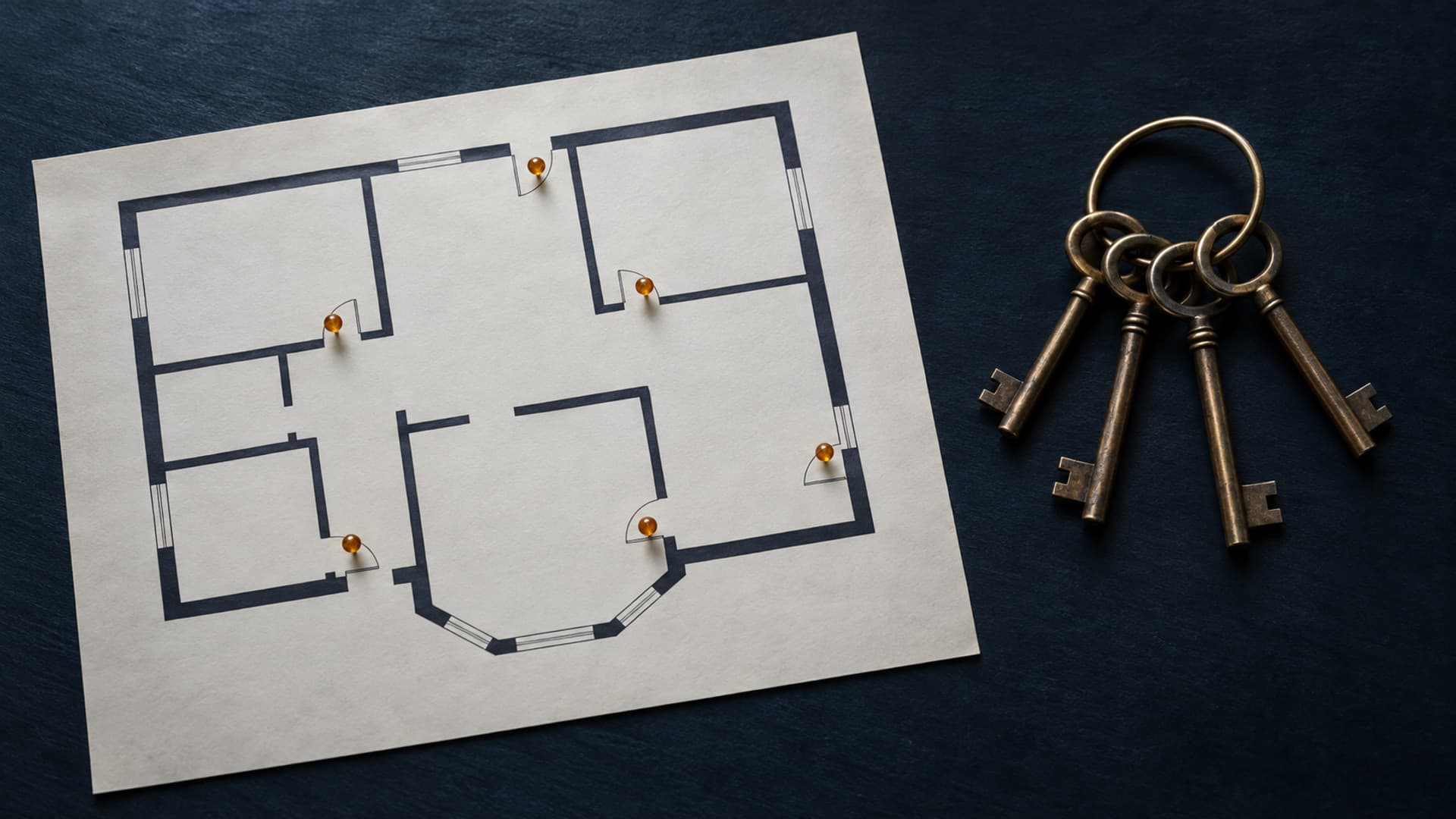
Customer internet banking and mobile banking were not the entry point. The systems that leaked were the ones DW describes as auxiliary systems that received less security attention: a portal built for loan brokers, an app for employees in the field, a tool for the sales team.
Every company has these. They get built quickly for a partner or a team, they solve a real problem, and then they sit outside whatever process protects the main product. Nobody is assigned to them. Their login is a little older. Their logs go nowhere in particular.
What changed this year is the cost of finding them. An agentic tool lets one person point a loop at many organizations, enumerate what is exposed, and try the obvious weaknesses on each one without getting bored. CrowdStrike's account is of one person hitting a whole sector over a few days. For a small team, the safe assumption is that your side doors will be scanned, and that scanning them costs the attacker almost nothing.
The lesson is not "buy AI defense." It is older and cheaper than that.
The side door inventory
Copy this into a doc and fill it in this week. It takes an afternoon for most small teams.
1. List every door. Write down every system that touches company or customer data and is reachable from the internet, not only the main product:
- Partner, vendor, broker, and reseller portals
- Internal tools and admin dashboards, including the one a contractor built
- Staging, preview, and demo sites, and old admin pages nobody deleted
- Employee mobile apps and field tools
- Form handlers, webhooks, and file upload endpoints
- Anything on a subdomain you forgot you owned
2. Same lock or no door. For each one, either put it behind the same login and MFA as your main product, ideally your single sign-on, or take it offline. "It is only for partners" is not a reason for a weaker lock. If nobody can say who uses it, turn it off and see who calls.
3. Log who comes in. Every door should record who logged in, from where, and what they pulled. Logs that nobody reads still matter, because they turn "we don't know" into "here is what left."
4. Slow down bulk reads. Rate limit queries and exports, especially search and lookup endpoints. A partner portal that returns one record at a time to a human should not return twenty thousand to a script.
5. Name who notices on a weekend. This campaign started on a Saturday. Decide who gets the alert when a side door sees unusual volume at 2am on a Sunday, and make sure that alert reaches a phone, not a shared inbox.
6. Put it on the calendar. Review the list every quarter, and add to it every time someone spins up a new tool for a partner or a team.
What I would do first
If you only have an hour, do steps 1 and 2 for anything that holds customer data. The banks in this story had serious security programs for their main products. The gap was everything around them. Small teams have fewer systems, which is an advantage: your full list probably fits on one page.
The tools that made this campaign cheap are public and will keep getting better. So will the tools for defenders. The difference will come down to whether you know where all your doors are.
If you want a second set of eyes on your side door list, Defendre Solutions can walk through it with you.
Sources
- CrowdStrike, "Unknown Threat Actor Uses AI-Driven ARTEX to Target South Korean Finance" (October 7, 2026): https://www.crowdstrike.com/en-us/blog/unknown-threat-actor-uses-artex-to-target-south-korean-finance/
- DW, "South Korea warns of AI-aided hacking after bank data breaches" (October 8, 2026): https://www.dw.com/en/south-korea-warns-of-ai-aided-hacking-after-bank-data-breaches/a-79592922
- Herald Business (October 3, 2026): https://biz.heraldcorp.com/article/10892497
- Seoul Economic Daily (October 2, 2026): https://en.sedaily.com/finance/2026/10/02/kb-joins-shinhan-in-data-breach-as-bank-security-fears-mount
- Kyunghyang Shinmun (October 4, 2026): https://www.khan.co.kr/en/article/202610042320007
- GovInfoSecurity: https://www.govinfosecurity.com/south-korea-suspects-ai-tool-helped-steal-bank-customer-data-a-33031