Anthropic shipped Claude Opus 4.7 and crossed $30B ARR on the same day. OpenAI is no longer the leader.
On April 16, 2026, Anthropic launched Claude Opus 4.7 and confirmed it has crossed $30 billion in annual recurring revenue, surpassing OpenAI. The company that spent two years being called "the safety-focused alternative" is now the commercial leader of the AI industry.

Listen to this post
Anthropic did two things on April 16, 2026. Both are big. Together they reset the industry.
First, the company shipped Claude Opus 4.7, the latest version of its flagship model. Second, it confirmed what analysts had been whispering for months: annual recurring revenue has crossed $30 billion, putting Anthropic ahead of OpenAI for the first time.
The company that spent two years being framed as the careful, safety-first alternative is now the commercial leader of the AI industry. The model that was supposed to be a quiet "safer choice" is now the default for enterprise coding, long-context reasoning, and agentic workflows. The narrative has flipped.
The $30 billion line
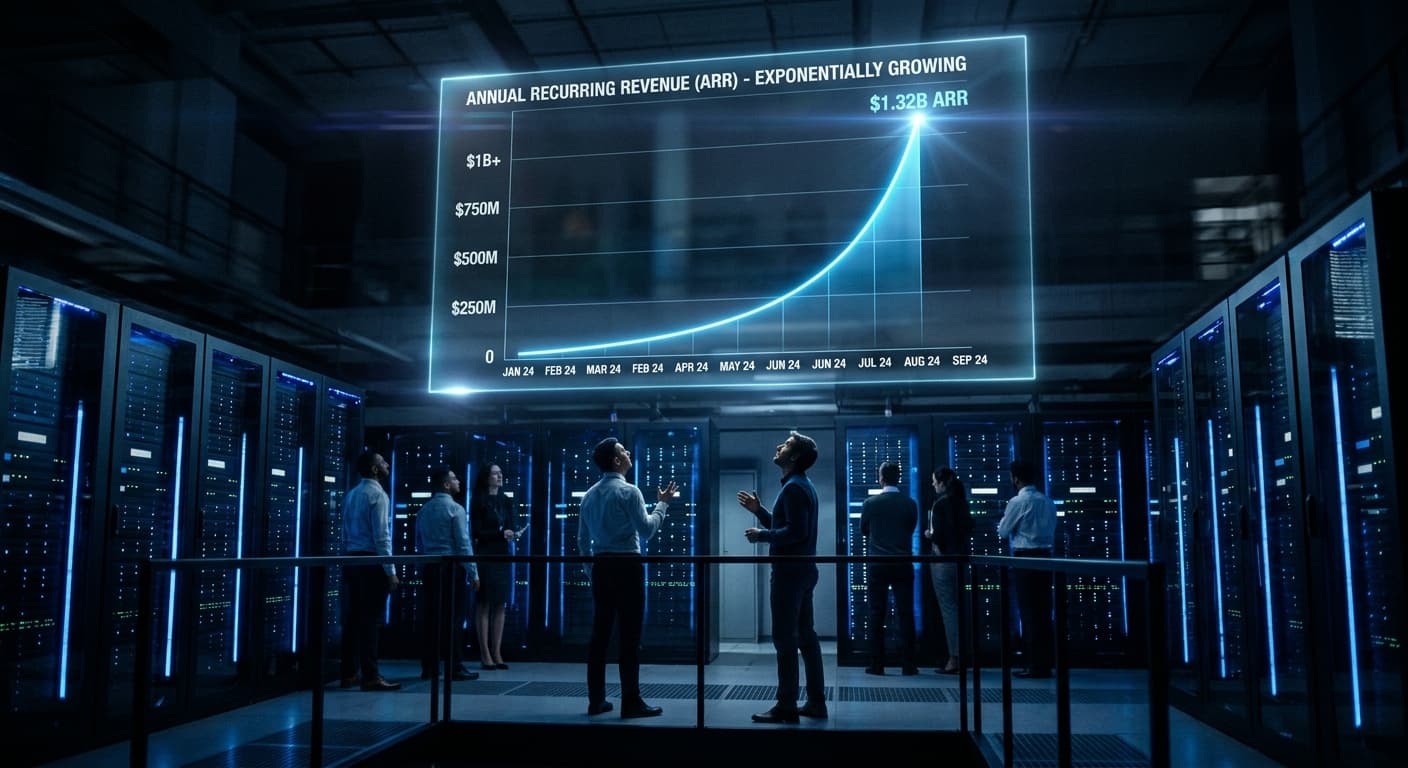
Anthropic was reportedly at $1 billion ARR at the start of 2024. It hit $4 billion by mid-2025, $14 billion late last year, and now $30 billion in April 2026. The growth curve is one of the steepest any software company has ever posted.
What changed is where the revenue comes from. Anthropic's enterprise API business — powered by Claude Code, Claude Agent SDK, and direct model access — is compounding because customers are paying for outcomes, not chat sessions. A single Fortune 500 engineering org running Claude Code across thousands of developers can push eight-figure annual spend on its own. Multiply that by hundreds of such accounts and the math works.
OpenAI is still the larger consumer brand. ChatGPT has more users. But ARR is not a popularity contest. ARR is contracted, predictable revenue, and on that metric Anthropic is now in first place.
What Opus 4.7 actually is
Opus 4.7 is not a reinvention. It is a sharpening. The changes land where Anthropic's enterprise customers have been asking for them:
- Longer effective context with better recall. The 1M token window holds up across the whole window now, not just the first and last chunks. That matters for whole-repository code review, multi-document legal analysis, and agent runs that span hours.
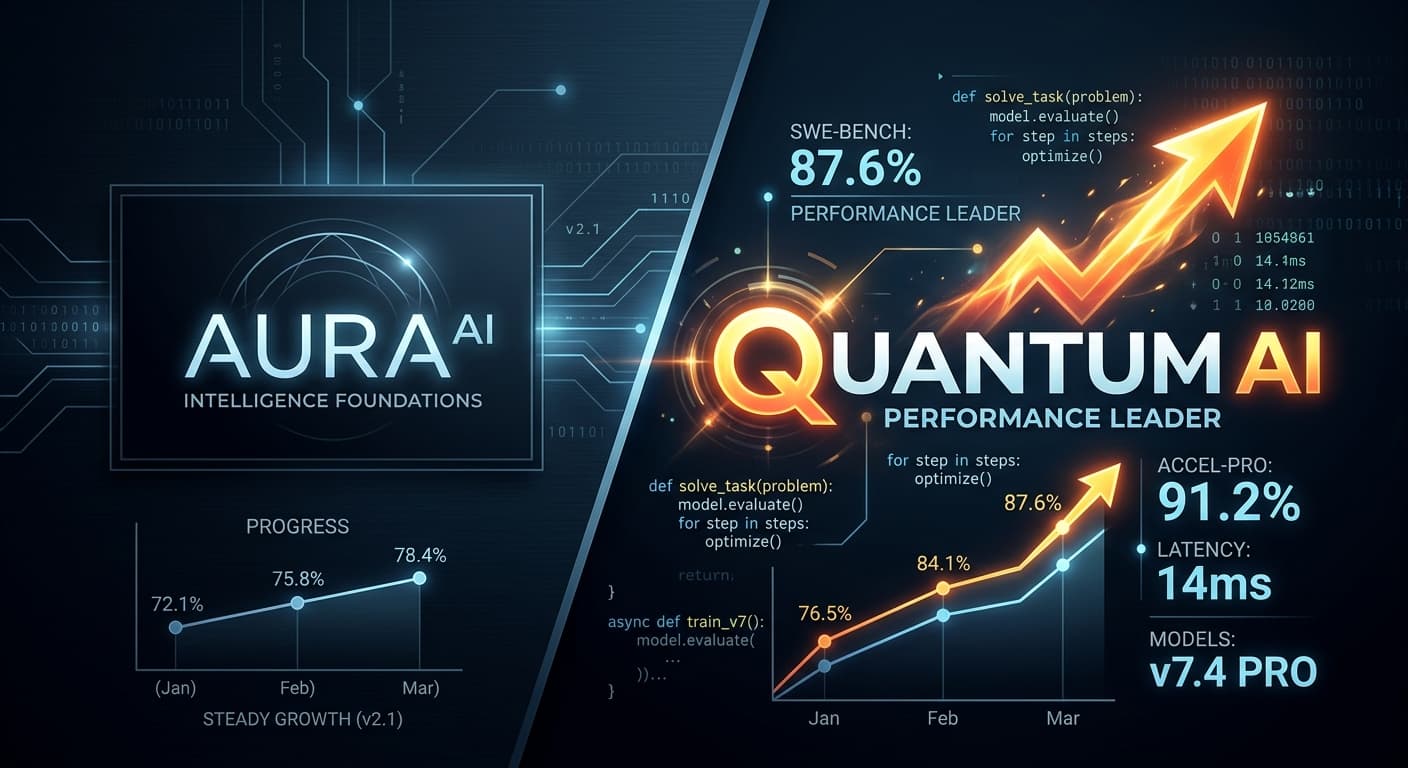
- Agentic coding improvements. Claude Code has been quietly dominating the developer segment for a year. Opus 4.7 pushes tool-use reliability, multi-file edits, and long-horizon task completion forward. Anthropic claims large gains on SWE-bench Verified and on internal agentic coding benchmarks that other labs do not publish.
- Computer use that works in production. Computer use has been the demo that never quite became a product. Opus 4.7 is the first version where the error rate on real desktop tasks looks low enough for actual deployment.
- Faster output, same intelligence. Opus 4.7 ships with a "fast mode" that accelerates output without downshifting to a smaller model. For latency-sensitive agent loops, this is the feature.
Opus 4.7 is the version of Claude that Anthropic wanted to ship a year ago. The infrastructure, the post-training data, and the evaluation scaffolding finally caught up.
Why enterprises bought Claude instead of GPT
The enterprise revenue lead did not happen by accident. Three things drove it.
Claude Code. When Anthropic shipped Claude Code, it did not just release a CLI. It released a workflow. Developers got a tool that read their repo, made changes, ran tests, and explained its reasoning. GitHub Copilot was still autocomplete. Cursor was an IDE with an inference layer. Claude Code was an agent that finished tasks. Engineering leaders noticed, and their budgets moved.
Fewer surprises. Enterprise buyers do not love surprises. Anthropic's Responsible Scaling Policy, its model card transparency, and its slower cadence of model deprecation made Claude easier to deploy in regulated industries. Banks, hospitals, and defense contractors could actually get procurement to approve Claude. OpenAI's sharper release schedule and more public controversies made the same approval process harder.
Tooling that matches how enterprises build. The Claude Agent SDK, prompt caching, batch processing, and long-lived context all fit how real production AI systems get built. Anthropic has been explicit that it is optimizing for developers and enterprises. That focus compounded.
OpenAI's response will be loud
OpenAI is not going to accept this quietly. Expect three moves over the next quarter.
A flagship model release. GPT-5.5 or whatever is next will arrive with aggressive benchmarks and a sharper price point. Sam Altman has been telegraphing this for weeks.
A coding agent that directly targets Claude Code. OpenAI has the Codex brand and the compute. The gap is product focus, not capability. That gap will close.
Pricing pressure. If OpenAI cannot win on capability, it will win on cost. Enterprise deals will get cheaper, and Anthropic will need to decide whether to match or hold margin.
Anthropic has a durable lead, not an insurmountable one. Two quarters of focused execution from OpenAI could narrow this gap.
What this means for Defendre Solutions clients
For anyone building with AI right now, the takeaway is practical: the model you choose for production workloads matters less than how fast you can adapt when the leader changes. Claude Opus 4.7 is the right default for agentic coding, long-context work, and computer use as of today. That may not be true in six months.
Build your stack so the model is a swappable component. Use the Claude Agent SDK when it is the best fit, but keep your orchestration layer provider-agnostic where you can. The companies that win this cycle will be the ones that can move with the frontier rather than the ones that bet their architecture on a single vendor.
The broader reframing
For two years, Anthropic was the smaller company with the better research culture. That framing is done. On April 16, 2026, Anthropic became the largest AI lab by enterprise revenue, the model leader for the workloads that pay the bills, and the company whose product decisions set the tempo for the rest of the industry.
OpenAI is still the more recognizable brand. Google still has more compute. Meta still has more users. But the money is moving to Anthropic, and the models coming out of Anthropic are the ones that enterprises are building on. Those two facts are the ones that matter.
Opus 4.7 is the product. $30 billion is the scorecard. The shift has already happened.