Anthropic Gave Claude Agents Time to Think Between Tasks. That Is a Bigger Deal Than It Sounds.
Anthropic just added a research-preview "dreaming" layer to Claude Managed Agents, alongside outcomes and multiagent orchestration updates. The real shift is not the name. It is that agent memory is becoming an active product surface.

Listen to this post
Anthropic announced something on Wednesday that sounds a little silly until you look past the label.
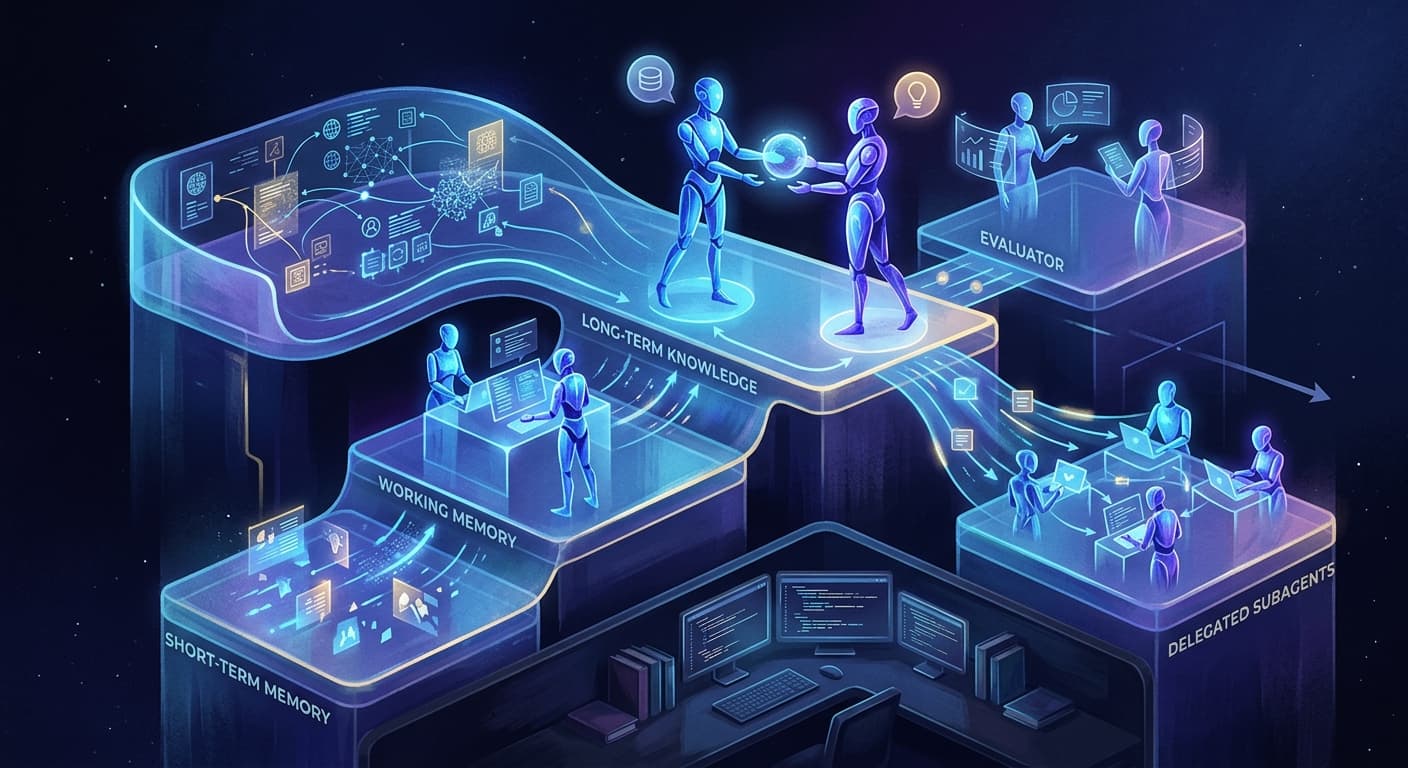
It gave Claude Managed Agents a feature called dreaming, which lets agents review past sessions, spot patterns, and improve their memory between runs. At the same time, Anthropic pushed further on two other pieces that matter just as much: outcomes, which let teams define success criteria and grade whether the agent actually hit them, and multiagent orchestration, which lets one agent hand work to other specialized agents.
The surface-level take is obvious: yes, "dreaming" is a very Anthropic name.
The real takeaway is more important. Agent memory is no longer just a log. It is becoming an active product layer.
This is memory moving from storage to behavior
Most AI memory features have felt pretty dumb so far.
They store preferences. They keep a few notes. They help the system avoid asking the same question twice. Useful, sure, but not a major shift.
What Anthropic is describing is different. In its announcement, the company says dreaming reviews completed sessions to pull out recurring mistakes, useful workflows, and team-wide preferences, then restructures memory so it stays high-signal over time.
That matters because long-running agents do not usually fail for one dramatic reason. They fail through accumulation. Context gets noisy. Small misunderstandings repeat. Preferences drift. Workarounds pile up. The agent technically remembers a lot but operationally learns very little.
Dreaming is an attempt to fix that.
If it works, the agent does not just retain context. It develops better judgment about what context deserves to survive.
Outcomes are the other half of the story
I think outcomes may be just as important as dreaming, maybe more.
Anthropic's Managed Agents update frames outcomes as a way to define what success looks like and let a separate evaluator check whether the agent met the bar. That is a quiet but meaningful shift.
A lot of agent demos still confuse completion with correctness. The agent produced files, wrote code, or answered every subtask, so the system calls that a win. Real teams know that is not enough. The work has to be right.
Outcomes move agent systems closer to how good operators already work:
- define the target clearly
- verify the result against that target
- retry or escalate if it misses
That sounds basic because it is basic. And it is exactly why it matters. The companies that win with agents will be the ones that productize evaluation, not just generation.

Multiagent orchestration is turning into the default pattern
Anthropic is also betting hard on a model that feels increasingly inevitable: one coordinator, multiple specialists.
Its platform documentation for multiagent sessions describes a coordinator agent that can delegate work to isolated session threads, each with its own configuration, tools, and context. In plain English, that means you stop pretending one giant prompt should do everything.
That is the right direction.
The more serious the workflow gets, the less believable the single-super-agent fantasy becomes. Good systems break work apart. They parallelize independent tasks. They route specialized work to specialized agents. They preserve isolation where it helps quality and speed.
Anthropic is packaging that architecture into the product itself.
That matters because once the platform makes delegation easy, developers stop treating multiagent design as an experiment and start treating it as the normal way to build.
The business signal is stronger than the feature name
Reuters also reported that Anthropic used the same event to announce a major compute deal with SpaceX and to double Claude Code rate limits for paid plans after demand surged.
That context changes how I read this launch.
This is not a cute branding exercise. This is infrastructure hardening for a category Anthropic thinks is about to get much bigger.
The company is not just saying, "our agents can reflect now." It is saying:
- developers want longer-running agents
- those agents need better memory hygiene
- those agents need built-in grading
- those agents need coordinated delegation
- Anthropic expects enough usage to justify more compute and higher limits
Put differently, this is what a platform does when it thinks agent workflows are graduating from novelty to normal workload.
My blunt read
The word dreaming will get the headlines because it sounds human and a little weird. Fine. That is the easy part of the story.
The harder and more important part is that Anthropic is building the missing operating system pieces for real agents: memory curation, success evaluation, and controlled delegation.
That is the layer I would pay attention to.
The next agent wave will not be won by whoever has the flashiest demo. It will be won by whoever makes agents more reliable across time, not just impressive in one session.
Anthropic seems to understand that.

Sources: Claude blog announcement, Anthropic Managed Agents multiagent docs, Reuters, ZDNET