OpenAI just named its new AI after the woman who made DNA discovery possible
GPT-Rosalind is OpenAI's first domain-specific model, built for biology, drug discovery, and translational medicine. It's a meaningful step toward cutting the 10-to-15 year timeline for getting a new drug from lab to patient. Whether it actually delivers on that promise is another question.
Listen to this post
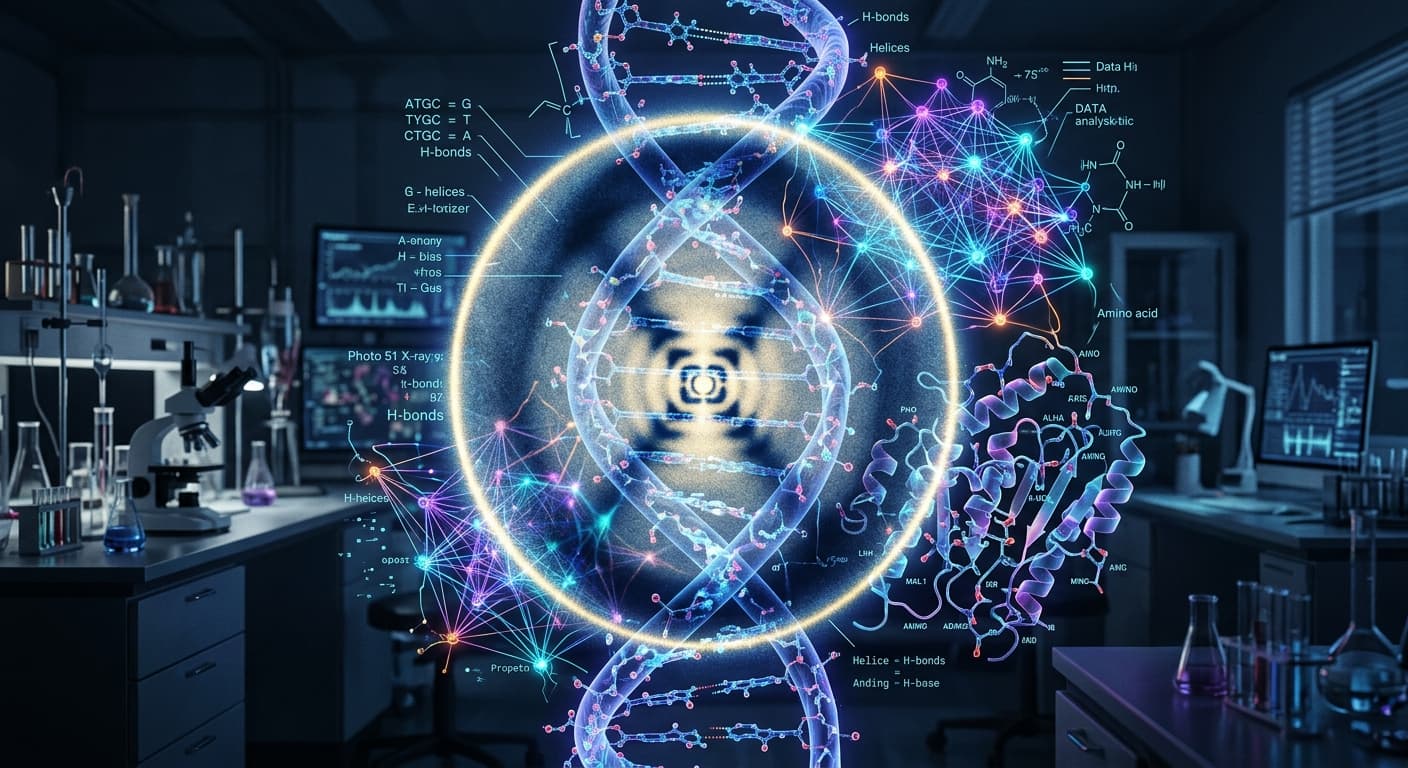
Rosalind Franklin never got the credit she deserved in her lifetime. Watson and Crick published the structure of DNA in 1953 using Franklin's X-ray diffraction data, Photo 51, without her permission. She died in 1958 at 37, never knowing her work had been the key to one of the most important discoveries in biology.
OpenAI named its new domain-specific model after her anyway. GPT-Rosalind dropped this week, and it's the company's first serious attempt at a purpose-built model for the life sciences. The intent is clear: Franklin's rigor became the foundation for modern molecular biology, and OpenAI wants GPT-Rosalind to be that kind of foundation for AI-augmented drug discovery.
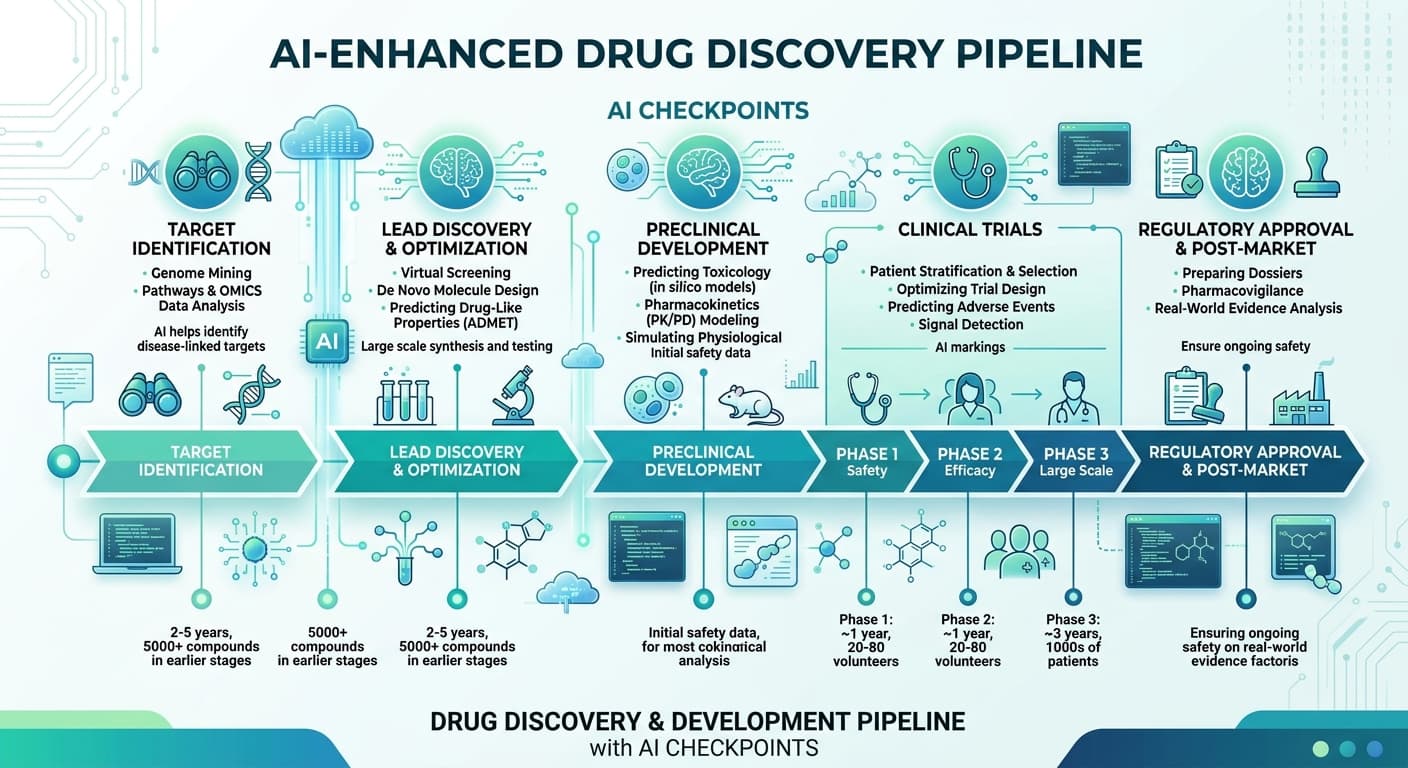
The numbers behind this are worth sitting with. The average new drug takes 10 to 15 years to move from target discovery to regulatory approval in the United States. That's not because science is slow. It's because the workflow is genuinely brutal. Researchers have to process enormous volumes of literature, query specialized databases, run experiments, analyze data across multiple tools, and then do it all again when something fails. The PhRMA group estimates that fewer than 12% of drugs that enter Phase 1 clinical trials ever make it to approval. The failure rate alone makes the case for any tool that helps.
What GPT-Rosalind actually does
GPT-Rosalind is a frontier reasoning model built on top of OpenAI's newest internal architecture, optimized for scientific workflows in biology, drug discovery, and translational medicine. OpenAI says the model supports evidence synthesis, hypothesis generation, experimental planning, and multi-step research tasks. It can query scientific databases, read papers, use specialized tools, and suggest follow-up experiments.
The model is available as a research preview in ChatGPT, Codex, and the API for qualified customers through a trusted access program. There's also a free Life Sciences Research plugin for Codex that connects scientists to over 50 public multi-omics databases, literature sources, and biology tools. That plugin is available more broadly, even to users on the mainline models.
The benchmark numbers are genuinely surprising. On LABBench2, a benchmark covering literature retrieval, database access, sequence manipulation, and protocol design, GPT-Rosalind outperformed GPT-5.4 on 6 out of 11 research tasks. The biggest gap was on CloningQA, which tests end-to-end design of DNA and enzyme reagents for molecular cloning protocols. On BixBench, a bioinformatics benchmark, it achieved leading performance among models with published scores.
OpenAI also partnered with Dyno Therapeutics, a company working on AI-designed gene therapies, to evaluate the model on an RNA sequence-to-function prediction task using unpublished, uncontaminated sequences. When evaluated in the Codex app, best-of-ten model submissions ranked above the 95th percentile of human experts in the AI-bio field on the prediction task, and around the 84th percentile on the sequence generation task.
Those numbers are impressive on paper. The question is whether benchmarks translate to real discovery workflows in a pharmaceutical company.
The skepticism is earned
Here's the thing that makes me pause. PitchBook published a report in January 2026 noting that more than $17 billion has been invested in AI-driven drug discovery since 2019. That investment has produced exactly zero drugs that have reached large-scale clinical trials. Not one.
The pattern isn't unique to pharma. AI has repeatedly shown it can do impressive things in controlled benchmark environments and then struggle when thrown into the messy reality of actual industrial workflows. Laboratory science is particularly resistant to this kind of translation because experiments depend on physical conditions, reagent quality, biological variance, and institutional knowledge that don't show up in training data.
OpenAI knows this. The company has built in guardrails through a trusted access program that restricts use to legitimate research organizations with governance controls, misuse prevention policies, and secure environments. The research preview doesn't consume existing credits. The company is working with Amgen, Moderna, Thermo Fisher Scientific, and the Allen Institute to test it in real workflows.
Sean Bruich, Senior Vice President of Artificial Intelligence and Data at Amgen, said in OpenAI's announcement that "the life sciences field demands precision at every step. The questions are highly complex, the data are highly unique, and the stakes are incredibly high." That's not boilerplate. It's an honest acknowledgment of what makes this domain hard.
OpenAI has also partnered with Los Alamos National Laboratory to explore AI-guided protein and catalyst design, including the ability to modify biological structures while preserving or improving key functional properties. That's closer to genuine scientific assistance than most AI demos.
What this actually signals
The bigger story here is the domain-specific trajectory. We've watched OpenAI and Anthropic both move from general-purpose models toward vertical specialization. Anthropic released Mythos for frontier reasoning. OpenAI released GPT-5.4-Cyber for cybersecurity last week, and now GPT-Rosalind for life sciences. Both companies are signaling that the era of one model doing everything equally well is ending.
Whether that's right depends on your view of AI development. Domain-specific models can be more capable in their target area because they can be trained on more relevant data and optimized for specific tool use patterns. But they also serve narrower markets, which raises questions about how much compute investment makes sense for models that only pharma researchers will use heavily.
The Rosalind Franklin name is fitting, even if it carries some irony. Franklin's contribution to DNA was foundational but unfinished. She didn't complete the work herself. GPT-Rosalind is also a beginning, not a conclusion. The benchmarks are strong but benchmarks don't cure diseases. The real test will be whether this model actually compresses the discovery timeline in a meaningful way, not whether it scores well on CloningQA.
OpenAI is positioning this as a long-term series. More biochemical reasoning capabilities will come. Los Alamos, Amgen, and Moderna will be using it first. If it works, the model name becomes a self-fulfilling prophecy. If it doesn't, it becomes a footnote.
Either way, the direction is clear. The next wave of AI progress isn't about making general models smarter. It's about making specific workflows faster. Drug discovery is one of the highest-stakes examples of that principle. Franklin would have appreciated the precision.