Frontier AI Cyber Access Is Getting Messy Fast
An Axios report appeared to link OpenAI's newest model to a restricted cybersecurity rollout. OpenAI says the two are unrelated. The real story? Reporting around frontier AI capabilities is now part of the risk surface, and the gated-access trend Anthropic kicked off is still accelerating — just with worse signal-to-noise than anyone expected.
Listen to this post
Editor's note (April 9, 2026): This post was updated after the underlying Axios report appears to have conflated OpenAI's cyber product / trusted tester group with its newest model. OpenAI has stated the two are unrelated, and Axios revised its story. The original version of this post relied on that framing. The corrected version below focuses on what we can confirm and the broader trend.
Two days ago, Anthropic rolled out Mythos through Project Glasswing, a restricted cybersecurity program with 12 partners and 40 total preview participants. I wrote about that here and called it a power grab disguised as responsible deployment.
Then an Axios report dropped claiming OpenAI was finalizing a new model with advanced cybersecurity capabilities for limited rollout, seemingly confirming the same pattern. The story spread fast.
There is just one problem: OpenAI says that framing is wrong.
What actually happened
According to Dan Shipper, who spoke directly with OpenAI, the company is indeed working on a cyber product with a trusted tester group. But that program is not tied to their newest model. Axios appears to have conflated two separate things — a restricted cyber access program and a new model release — into one narrative. Axios subsequently updated their story.
That distinction matters enormously. "OpenAI gates its newest model over cyber risk" is a fundamentally different story from "OpenAI is running a cyber-focused tester program alongside its normal model releases." The first implies the model itself is too dangerous for broad access. The second is a product and go-to-market decision.
The reporting is now part of the risk surface
Here is what I think people are missing.
We are entering a phase where the reporting about frontier AI capabilities is itself a vector for confusion, misallocation, and bad decision-making. When a credible outlet publishes a story that conflates a product program with a model capability restriction, and that story gets amplified before the correction lands, real things happen:
- Security leaders make procurement decisions based on wrong assumptions about what is restricted and why.
- Policy conversations get shaped by a narrative that turns out to be inaccurate.
- Competitors and partners react to signals that were never actually sent.
This is not about blaming journalists. AI capability, product access, and safety restrictions are genuinely tangled together right now, and the labs are not making it easy to parse. But the practical consequence is that the information environment around frontier cyber AI is degraded, and leaders who move on headlines without verifying are going to make mistakes.

What we can actually confirm
Strip away the conflation and here is what holds up:
OpenAI is running a restricted cyber program. Trusted Access for Cyber launched in February 2026 after GPT-5.3-Codex shipped. It gives invite-only organizations access to more capable or permissive models for legitimate defensive security work. OpenAI committed $10 million in API credits to participants. That is real infrastructure investment, not a press release.
The program has serious backing. Rob T. Lee from SANS, Wendi Whitmore at Palo Alto Networks, and Adam Meyers from CrowdStrike have all been associated with coverage of this program. When the heads of threat intelligence at the biggest security companies show up, the signal is clear.
Anthropic is running an equivalent program. Project Glasswing with Mythos is live, restricted, and operating with a similar structure. Two major labs running parallel invite-only cyber programs is still a pattern worth watching — even if the specific trigger for this story was overstated.
The gated-access trend is real, even if this story was wrong
Here is the part I still stand behind from my original analysis.
The fact that the Axios framing was inaccurate does not change the structural trajectory. Both OpenAI and Anthropic are building tiered access systems for cybersecurity capabilities. The direction is clear even if the specific claim about OpenAI's newest model was wrong.
For years, AI model access was binary. You either had API access or you did not. Pricing tiers existed, but capability was broadly the same. Everyone using GPT-4 got the same GPT-4. Everyone on Claude got the same Claude.
That era is ending. Both labs are now running programs where the most capable models for specific domains are available only to vetted organizations. The capability gap between the public model and the restricted offering is becoming the product.
For security teams at large enterprises, this changes procurement. The question stops being "which AI vendor has the best benchmark scores" and starts being "which vendor will actually give us access to the models that matter for our threat landscape."
For smaller organizations, the picture is worse. If the best vulnerability discovery tools are locked behind invite-only programs with Fortune 500 partners, the security gap between large and small organizations widens.
The AISLE research still complicates the narrative
Researchers at AISLE, including Stanislav Fort, found that widely available models can already find some of the same vulnerabilities that restricted models like Mythos uncovered.
If publicly available models can replicate meaningful portions of what gated models find, then gating is either incomplete theater or focused on a narrow set of truly advanced capabilities that public models cannot match. The labs would argue it is the latter — that restricted models can chain complex exploit paths, reason about novel attack surfaces, and operate autonomously in ways public models cannot.
The AISLE research suggests the capability boundary between public and restricted is blurrier than the labs want you to believe. And that raises the harder question: if dangerous capabilities are already partially available in public models, does restricting frontier access actually reduce risk? Or does it mostly create a two-tier market while the actual threat surface stays roughly the same?
Both things can be true. Restricting the most capable models reduces some risk at the margin. And the restriction simultaneously creates a market structure that benefits the labs commercially.
What this actually means
Three things are clear.
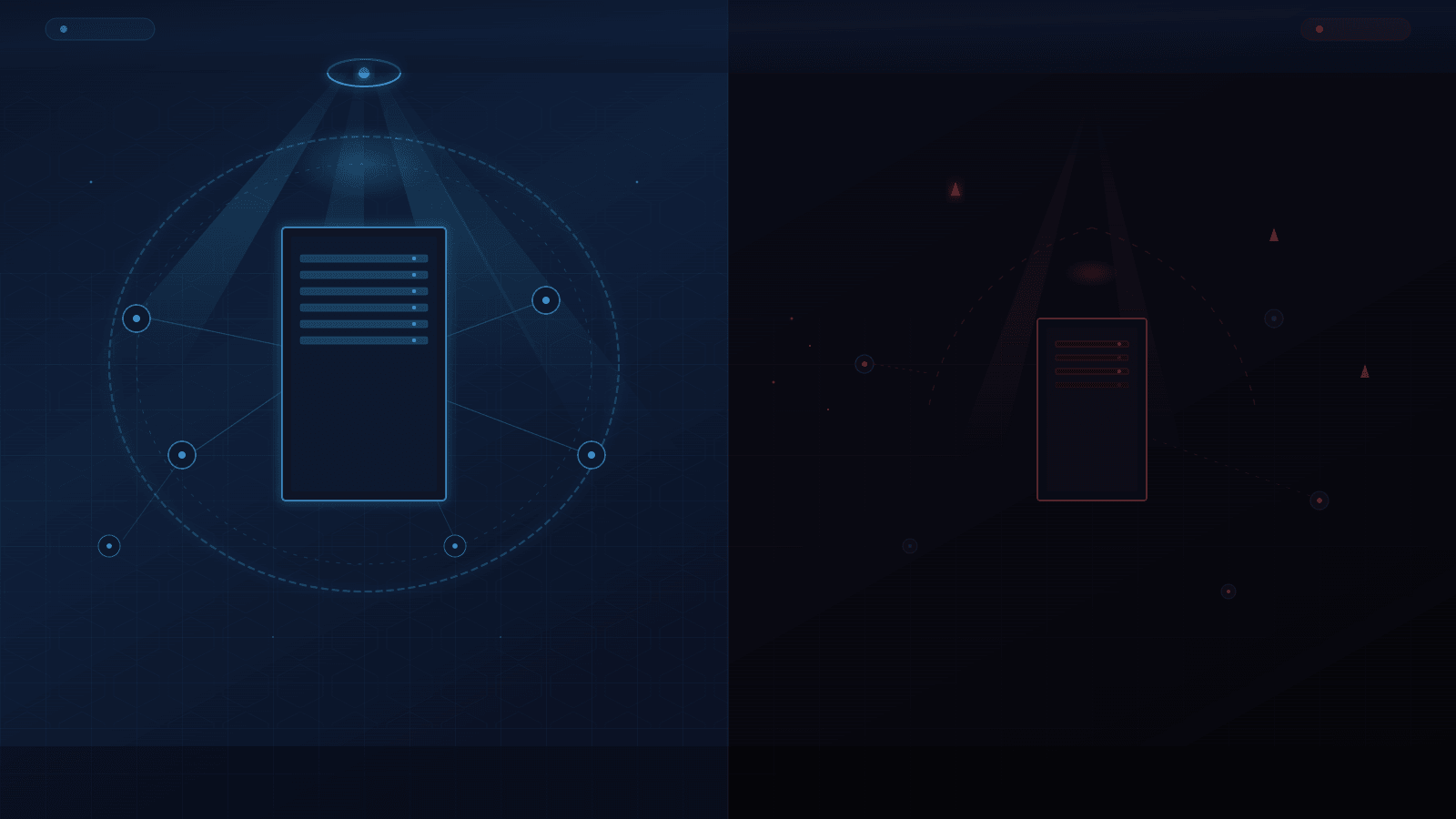
Tiered AI access is happening regardless. Whether it is tied to specific models or to product programs, both labs are building restricted cyber offerings. Expect Google DeepMind and others to follow within months.
The information environment is a mess. The gap between what gets reported about frontier AI capabilities and what is actually happening is widening. If you are making strategic decisions based on AI capability reporting, you need to verify before you act. Headlines are not intelligence.
Regulation is trailing badly. Both labs are building governance frameworks faster than any government body. The rules for who gets access to frontier cyber capabilities are being written in partner agreements and API policies, not legislation. By the time regulators engage meaningfully, the market structure will already be set.
For builders, the takeaway is practical. Your security posture is about to be measured against what frontier AI can find. If you are carrying significant security debt in legacy systems, the timeline for that debt becoming visible just got shorter. Models that can tear through old codebases and surface buried vulnerabilities are already in the hands of major security firms. Your code will face that kind of audit eventually, whether you invite it or not.
The real story
Stop focusing on which model is gated or why. The original Axios framing was wrong, but it was plausible — and that plausibility is the story.
We are in a moment where it is genuinely hard to tell the difference between a model being restricted for safety reasons, a product being rolled out to a tester group, and a marketing strategy dressed up as responsible deployment. The labs are not drawing clear lines. The press is struggling to parse the difference. And security leaders are making decisions in that fog.
The risk is not just what frontier AI can do. It is that no one can agree on what is actually happening, who has access to what, and why.
That confusion is the new attack surface. And it is wide open.